Clothing Packaging on a Budget: How to Look Luxury Without Overspending
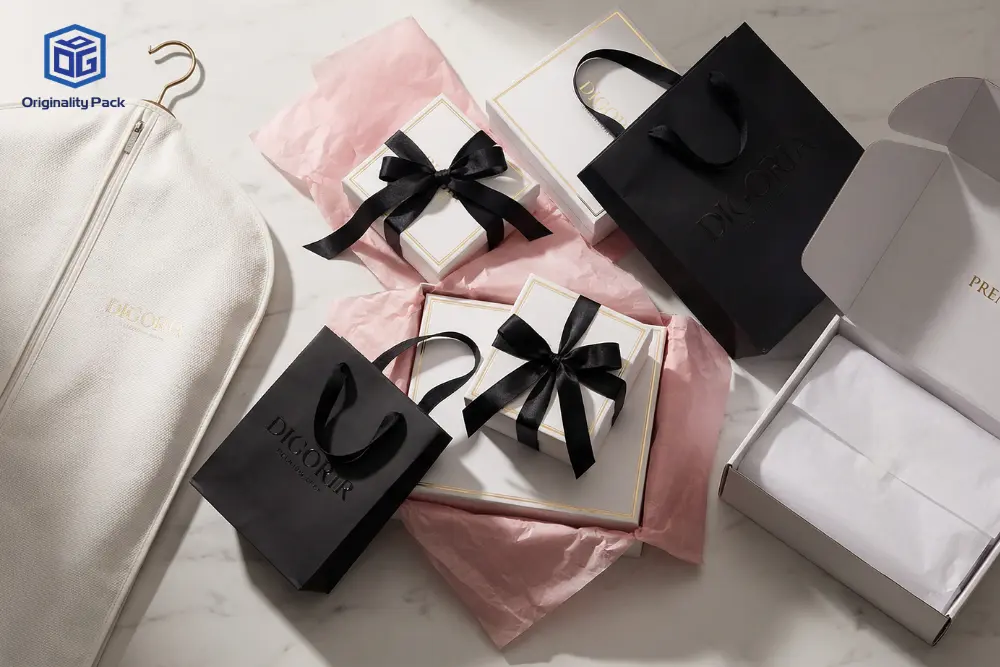
Table of Contents Discover 6 proven strategies to create premium clothing packaging without overspending. Learn how collapsible boxes, sustainable materials, and smart material choices can cut your total packaging costs by 30-50%. What Does “Luxury on a Budget” Really Mean in Clothing Packaging? The perception of luxury in packaging has little to do with spending extravagantly and everything to do with making strategic decisions. When customers receive their clothing order, the unboxing experience shapes their entire perception of your brand. A well-designed package creates anticipation, reinforces brand value, and encourages social media sharing—all without requiring a luxury budget. For clothing brands selling in-store or at events, a custom luxury paper bag is often the first branded touchpoint a customer carries away — making it one of the highest-visibility pieces in your entire packaging set. The key principle is optimizing total costs, not just unit price. This means considering the entire supply chain: material costs, printing expenses, storage requirements, and shipping fees. Often, spending slightly more on materials can dramatically reduce logistics costs, resulting in a lower total cost of ownership.This guide covers six actionable strategies specifically tailored for high-end white card gift bags around 250g, premium rigid boxes, and poly mailers. Whether you are an emerging fashion brand or an established retailer, these approaches will help you achieve premium presentation while maintaining cost efficiency. Premium Paper Stocks: Skip the Printing, Keep the Luxury The most effective way to reduce costs while maintaining high-end appearance is eliminating unnecessary printing processes. Full-coverage printing adds significant expense regardless of color, yet many brands default to printed solutions when superior alternatives exist. The key insight is matching paper to your design needs. Colored specialty papers with inherent color eliminate the need for printing when you want solid colors. White specialty papers, however, offer maximum design flexibility when printing is required. Paper Selection Guide Paper Type Best For Printing Needs Cost Perception White Cardboard (250g) Luxury gift bags, rigid box exteriors Yes – Optimal ink adhesion $$ High Colored Specialty Paper Minimalist solid color designs No – Inherent paper color $$ High Kraft Paper Eco-friendly & Sustainable brands Optional – Looks great plain $ Eco-Chic Black Specialty Paper Bold, ultra-premium presentation No – Pure deep black base $$ Ultra-Premium Textured Paper (Linen) High-end hang tags & luxury inserts Optional – Focuses on tactile feel $$$ Sensory Luxury Why Colored Specialty Papers Save Money Small Batch Orders (Under 2,000 units): Colored specialty papers deliver superior quality. The paper’s natural texture and color saturation create a richer, more premium feel than printed surfaces—you get depth and authenticity that printing simply can’t replicate. While specialty papers cost more per unit, you eliminate printing setup fees, plate costs, and per-unit printing charges. For limited runs, the total investment often undercuts printed alternatives. Large Batch Orders (Over 5,000 units): Traditional printing becomes the more economical choice. The per-unit cost of specialty papers doesn’t decrease at scale, but bulk printing costs get significantly amortized. A printed box on quality white cardstock can achieve competitive aesthetics at better unit economics when quantities are high. When to Choose White Cardboard White cardboard becomes the better choice when your design requires logos, text, patterns, or multi-color elements. To better understand how thickness impacts durability and cost, check our GSM Guide. White provides the optimal canvas for printing, offering better ink adhesion and color accuracy than colored stocks. The printing cost is necessary for complex designs, but you still benefit from the premium feel of specialty paper versus standard stock. The calculation is simple: specialty papers cost slightly more than standard stock, but eliminating printing for solid colors often results in lower total costs. When printing is necessary, specialty paper still adds perceived value without proportional cost increases. Sustainable Packaging as a Brand Asset Sustainability has transitioned from differentiator to expectation. Modern consumers, particularly in fashion, actively seek brands demonstrating environmental responsibility. Sustainable packaging communicates values alignment without requiring explicit explanation.Fortunately, eco-friendly choices frequently align with cost optimization. Recycled materials often cost less than virgin alternatives while appealing to environmentally conscious consumers. This dual benefit makes sustainability one of the smartest investments in packaging strategy. Sustainable Materials Suitable for Clothing Packaging Recycled card stock Modern recycled papers offer quality indistinguishable from virgin materials. Post-consumer waste (PCW) papers carry additional credibility with eco-conscious shoppers. Many suppliers now offer recycled options at competitive prices. FSC-certified papers Certification from the Forest Stewardship Council ensures responsible forestry practices. This certification has become a minimum expectation for European markets and is increasingly important globally. Recycled poly mailers Instead of traditional plastic mailers, consider options made from recycled polyethylene. These function identically to conventional poly mailers while containing recycled content. Some options are fully recyclable through store drop-off programs. Cotton and canvas alternatives Reusable cotton dust bags replace disposable poly bags for premium items. While initially more expensive, these bags extend brand visibility as customers reuse them, providing ongoing marketing value. Biodegradable additives For poly mailers that will be discarded, options with biodegradable additives accelerate decomposition. These address consumer concerns without significant cost premiums. The premium positioning frequently aligns with sustainability. Brands marketing themselves as conscious choices often achieve higher perceived value—consumers associate environmental responsibility with quality and longevity. The Luxury Paper Bag: Your Brand’s Most Visible Packaging Piece Unlike boxes that customers open at home alone, a luxury paper bag travels through streets, cafes, and offices — giving your brand public visibility long after the purchase. For boutiques and retail brands, this makes it one of the highest-ROI packaging investments available. The good news is that a custom luxury paper bag doesn’t have to be expensive to look premium. Choosing the right paper weight (250-300gsm coated), a single foil-stamped logo, and ribbon handles can create a high-end retail feel from as low as $0.80-1.20 per unit at 500 pieces — well within a budget-conscious packaging strategy. See our custom luxury paper bags with factory-direct pricing from 100 pieces. Collapsible Boxes: The Hidden Shipping Saver Traditional rigid boxes command premium
Clothing Packaging on a Budget: How to Look Luxury Without Overspending Read More »