
Table of Contents
Introduction: Why GSM Matters for Your Clothing Bags
When it comes to clothing packaging, choosing the right paper bag isn’t just about looks—it’s about balancing cost, durability, and brand image. The GSM (grams per square meter) of your paper bag directly affects how well it performs, how long it lasts, and how much you pay.
Here’s the quick answer: If you’re running a large chain store and need to control costs, go with 150gsm kraft paper bags. If you want to impress customers at a boutique or high-end fashion store, 250gsm cardstock is your best bet. Anything above 300gsm? We’d recommend avoiding it—we’ve seen too many issues with edge cracking during production, and the extra thickness doesn’t really improve look or strength.
In this guide, we’ll break down everything you need to know about choosing the right GSM for your clothing paper bags—without the confusing technical jargon.
Key Takeaway
For most fashion retailers, 250gsm hits the sweet spot between durability and practicality. It's strong enough to hold heavy garments, resists edge cracking, and works with premium finishes like gold stamping and embossing.
What is GSM, Actually?
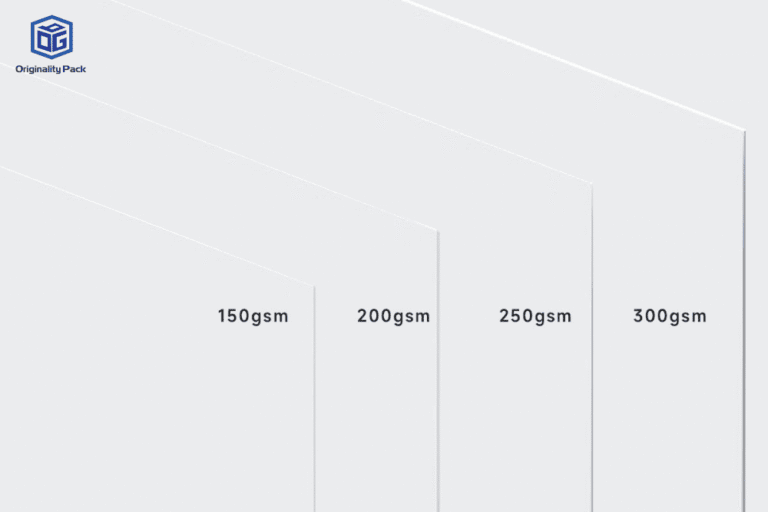
GSM stands for “grams per square meter”—it’s a measurement of paper density. Think of it this way: a higher GSM means a thicker, heavier, and generally stronger paper.
But here’s the thing—GSM isn’t the only factor that matters. The type of paper (kraft, white cardstock, specialty paper) and how it’s manufactured also play huge roles in final bag quality.
How GSM Affects Your Paper Bags
Bag Gsm | Load capacity | Durability | Print quality | Cost |
|---|---|---|---|---|
Lower GSM (150) | Good for light items | Moderate | Good | Lower |
Higher GSM (250-300) | Excellent for heavy items | High | Excellent | High |
For custom paper bag orders, understanding GSM helps you make smarter purchasing decisions—not just going with whatever the supplier recommends.
Selecting the right GSM is a balance between brand perception and production costs. However, material thickness is just one piece of the puzzle. To see the full picture of how to optimize your overall packaging budget, you also need to consider design efficiency and logistics.
GSM Selection Guide for Clothing Paper Bags
150gsm: The Budget-Friendly Choice for Large Retail Chains
Best for: Supermarkets, fast fashion brands, large retail chains
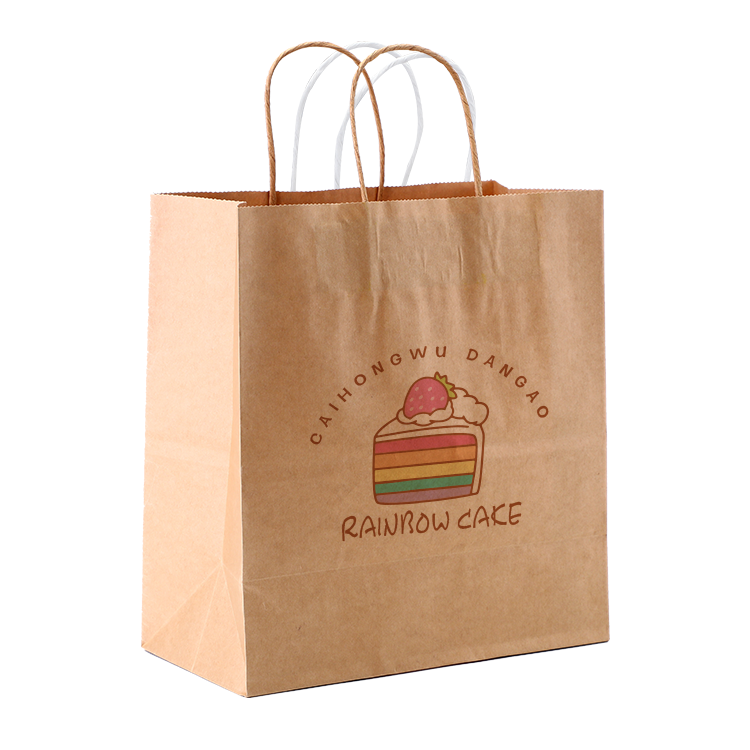
Let’s be real—not every business needs heavyweight luxury bags. If you’re running a large chain store with tight budgets and high volume needs, 150gsm kraft paper bags make total sense.
What you’re getting:
- Maximum cost efficiency for bulk orders
- Enough strength for lightweight clothing (t-shirts, shirts, folded garments)
- Eco-friendly and fully recyclable
- Simple brand printing without fancy finishes
Our observation from working with major retail chains: Most large-scale operations stick with printing-only on 150gsm kraft paper. Why? Because it gets the job done—holding products securely while displaying your brand—without driving up costs unnecessarily.
What you won’t get: This weight isn’t suitable for heavy items or premium finishes. Skip the hot stamping, embossing, or UV coating on 150gsm, the paper is hard to handle the pressure needed for those processes.
Watch out for: Don’t use 150gsm bags for heavy footwear, accessories with metal components, or multiple garment layers. The bags will sag or potentially tear.
Pro tip
If you're a large retailer, negotiate volume discounts. At scale, even small per-unit savings add up significantly.
250gsm: Our Top Recommendation for High-End Fashion Retail

Best for: Boutiques, designer stores, mid-to-luxury fashion brands
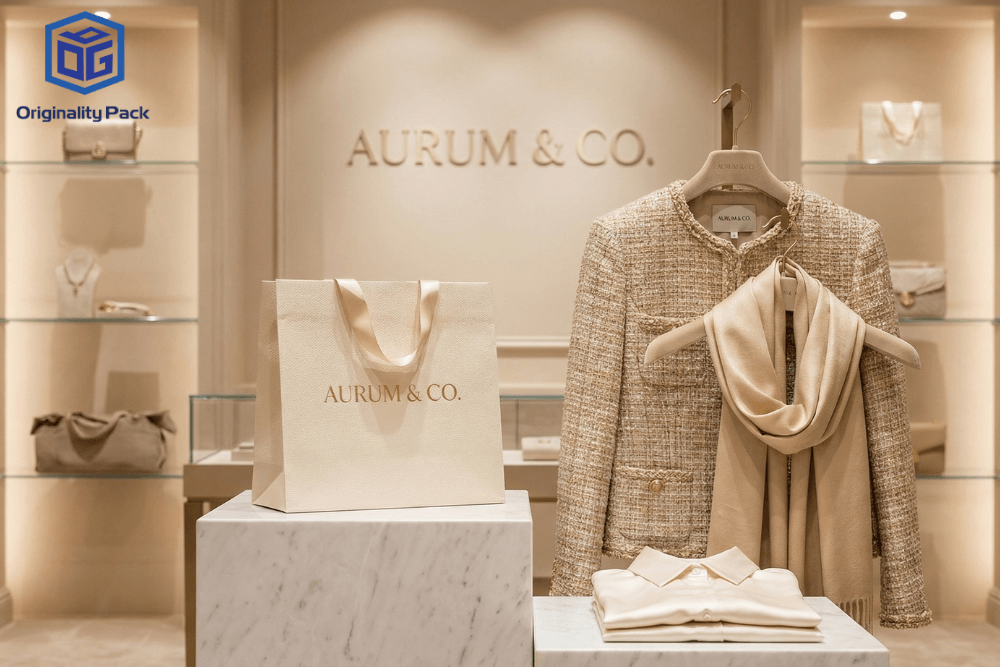
If there’s one GSM we’d recommend for most fashion retailers and custom luxury paper bags, it’s 250gsm. This is where you get the best of everything—strength, appearance, and practicality.
What makes 250gsm special:
- Excellent load capacity: Handles heavy winter coats, multiple items, and accessories without breaking a sweat
- No edge cracking issues: Unlike heavier papers, 250gsm folds cleanly without that frustrating splitting along the edges
- Premium look and feel: The weight communicates quality without being excessive
- Works with virtually any finish: Gold stamping, embossing, debossing, spot UV—it’s all possible on 250gsm paper
When it comes to finishing techniques, here’s what we know from industry practice: hot stamping and embossing processes work best on paper that’s 250gsm or heavier. The paper needs enough substance to handle the heat and pressure without warping or cracking.
The real talk: We’ve seen countless brands upgrade from 150gsm to 250gsm and immediately notice the difference in customer perception. People instinctively trust the weight of a bag—it feels like it matters.
Cost reality: Yes, 250gsm costs more than 150gsm. But for boutique and mid-market brands, the price difference is worth it for the professional image you’re projecting. Plus, you’ll likely experience fewer product returns from bag failures.
Recommendation: For most clothing packaging needs beyond basic retail, 250gsm is your sweet spot. It’s what most high-street and premium fashion brands settle on after testing other options.
250-300gsm: Luxury Brand Territory (With Caveats)

Best for: Luxury fashion houses, high-end jewelry stores, premium watch boutiques
When you need to communicate “luxury” at first glance, heavier paper helps. Many luxury brands do gravitate toward 250-300gsm for that substantial, premium feel.
The benefits:
- Maximum durability and tear resistance
- Luxury tactile experience
- Supports complex, multi-element branding
- Stands up to repeated handling
The honest truth about 300gsm:
Here’s what we actually see in production: 300gsm paper creates more problems than it’s worth. We’ve noticed that during manufacturing, heavier paper (around 300gsm and above) tends to crack along the fold lines—those ugly edge splits that ruin otherwise beautiful bags.
And honestly? The difference in look and strength between 250gsm and 300gsm is minimal. You’re paying more for a product that’s actually harder to work with.
Our honest recommendation: If you’re set on going above 250gsm, absolutely get samples first before ordering full production. Test those bags with your actual products inside. Check every edge and corner. Larger bags especially tend to have issues with the heavier stock.
Bottom line: 250gsm gives you nearly all the benefits of 300gsm without the production headaches. Unless you have very specific requirements, stick with 250gsm.
Paper Materials and GSM: Finding Your Perfect Match
The relationship between paper type and GSM matters. Here’s how different materials perform at different weights: (For a deeper look at when kraft paper makes sense versus when to upgrade to a luxury structure, see our Kraft Paper Bag vs Luxury Paper Bag guide.)
Kraft Paper
GSM | Best Use | Finishes Possible |
|---|---|---|
150GSM | Budget retail, fast fashion | Printing only |
250gsm | Premium kraft positioning | All standard finishes |
White Cardstock
GSM | Best Use | Finishes Possible |
|---|---|---|
250gsm | Boutique fashion | All Finishes, e.g.: Gold stamping, embossing, UV |
300gsm | All finishes (with caution) | All standard finishes |
Specialty Papers (Textured, Art Papers)
GSM | Best Use | Finishes Possible |
|---|---|---|
250-280gsm | Designer brands | All Finishes, e.g.: Gold stamping, embossing, UV |
Matching GSM to Your Brand Tier
Brand Type | Recommended GSM | Paper Type | Finish Level |
|---|---|---|---|
Large chain / Fast fashion | 130-150gsm | Kraft | Print only |
Mid-market / Department | 230-250gsm | Kraft or White Cardstock | Print + basic foil |
Boutique / Designer | 250gsm | White Cardstock / Speciality Paper | Full finishing + Foil / Embossing / UV Spot |
Luxury / Ultra-luxury | 250-300gsm | White Cardstock / Speciality Paper | Premium combinations |
Practical Tips: Choosing and Quality Checking Your Paper Bags
Before You Order: Supplier Transparency Audit
Don't compromise on your brand experience. Ask these 4 critical questions to ensure you're getting true manufacturing quality, not just a low price.
Demand precise numbers (e.g., 210gsm vs 250gsm). Avoid vague terms like "standard" or "premium" which hide poor paper density.
Never skip the sampling phase. A physical prototype is your only insurance against unexpected textures or structural failures.
Reliable factories maintain a defect rate under 5%. If they can't provide QC standards, your bulk order is at risk.
Larger bags require higher GSM to maintain structure. A good supplier acts as a consultant, not just an order-taker.
How to Check Paper Bag Quality (Quick Inspection Guide)

When you receive your samples or production run, check these elements:
Paper integrity
- Feel the paper: good quality should have slight give, not feel brittle
- Check edges: look for any cracking, especially at fold points
- Examine corners: these take the most stress
Construction quality
- Test handles: pull gently to ensure they’re securely attached
- Check bottom seams: they should be clean and fully adhered
- Verify dimensions: consistent sizing matters for display and functionality
Print and finish quality (if applicable)
- Colors should match your proof
- Foil stamping should be clean with no easily peeling
- Embossing should be crisp without paper distortion
Common Mistakes to Avoid
Mistake | Why It Matters |
|---|---|
Choosing GSM based only on "feeling premium | You might pay more for no real benefit |
Skipping samples | Issues are much harder to fix after full production |
Ignoring bag size | Larger bags may need different GSM than smaller ones |
Overlooking finishing compatibility | Not all GSMs work with all decoration methods |
Frequently Asked Questions
We recommend 250gsm white cardstock or specialty paper. This gives you the perfect balance of strength, appearance, and finishing options. It’s strong enough to hold multiple clothing items, resists edge cracking, and works with premium finishes like gold stamping and embossing.
We don’t recommend it. 150gsm works well for lightweight items like t-shirts, scarves, or single folded garments. For heavier items like denim, outerwear, or multiple clothing pieces, you’ll want at least 200gsm, preferably 250gsm.
From our production experience, 300gsm and heavier papers frequently develop edge cracking (splitting along the fold lines) during manufacturing. Additionally, the actual improvement in strength and appearance compared to 250gsm is minimal—you’re paying more for more problems. If you want premium weight, 250gsm is the practical maximum.
Here’s the practical breakdown:
- 130-150gsm: Printing only—too thin for hot stamping or embossing
- 250-300gsm: Full range of finishes including gold stamping, embossing, debossing, spot UV, and lamination
Check these key things: paper should have slight flexibility, not feel brittle. Edges and corners should be clean with no visible cracking. Handles should be firmly attached with no signs of tearing. If you’re getting custom printing or finishes, verify colors match your proof and foil/embossing is clean.
Based on our experience working with fashion brands of all sizes, yes. 250gsm gives you professional appearance, reliable durability, and access to all the premium finishing options without the production complications of heavier papers. It’s become the industry standard for good reason.
Not necessarily.
While higher GSM means thicker paper, overall paper bag strength also depends on several other factors:
- Paper material quality
• Bag structure and bottom folding
• Handle reinforcement
• Lamination or coating
In many cases, a well-designed 250gsm bag can outperform a poorly structured 300gsm bag.
That’s a different use case entirely! For shipping, you’ll want to check out our guide on What Kind of Packaging Is Best for Mailing Clothing—it covers poly mailers, cardboard boxes, and other options designed for transit rather than in-store presentation.
Conclusion: Making the Right Choice for Your Brand
Here’s the quick summary:
- Large retail chains: 130-150gsm kraft paper bags keep costs down while getting the job done
- Boutiques and fashion retailers: 250gsm is your best bet—strong, professional, and versatile
- Luxury brands: 250-300gsm works, but get samples first to check for edge cracking
The truth is, going heavier than 250gsm rarely makes sense. You’re paying more for worse production outcomes, with minimal actual benefit to show for it.
Ready to order your custom paper bags? Start with samples at your chosen GSM, test them with your actual products, and don’t be afraid to ask your supplier the hard questions. Your packaging is part of your brand experience—make it count.
If you’re developing a full packaging system for your brand, you may also want to explore our guide to clothing packaging solutions for fashion brands.
Ready to optimize further? Check out our Ultimate Guide to Luxury Packaging on a Budget to see how volume pricing and collapsible designs can save you thousands.
Discuss Your Clothing Packaging Project
Tell us about your packaging needs and our team will provide practical advice and a quotation.