
Table of Contents
Quick Answer: For most retail brands, choose a 130-150gsm kraft paper bag when you need a cost-controlled carrier for takeaway, grocery, bakery, bookstore, or daily retail use. Choose a 250gsm kraft cardboard paper bag when you want a natural look with stronger structure and better hand feel. Choose a white cardboard paper bag when you need cleaner printing, more accurate brand colors, foil stamping, embossing, or a gift-ready presentation.
Need a Quick Recommendation?
Choose your business type and we will recommend the right paper bag style, material, and finish.
Everyday Retail
Bakery, grocery, bookstore, and daily shoppingFashion & Apparel
Clothing brands, boutiques, and online storesBeauty & Lifestyle
Skincare, candles, gifts, and premium productsLuxury Presentation
Jewelry, events, and high-end retail brands130-150gsm Kraft Paper Bag
Brown or white kraft paper with practical retail structure.
Cost-efficient, practical, and suitable for high-volume retail shopping bag orders.
Twisted paper handle, simple logo printing, and natural kraft appearance.
250gsm White Cardboard Paper Bag
250gsm white cardboard paper for a clean and premium surface.
Creates a stronger brand impression with better structure and excellent printing performance.
Ribbon handle, Pantone color matching, foil stamping, and embossing.
250gsm White Cardboard Paper Bag
White cardboard paper with premium finishing options.
Helps create a refined shelf presence and gift-ready packaging experience.
Soft-touch lamination, foil logo, ribbon handle, and custom finishes.
Luxury Custom Paper Bag
250gsm cardboard paper or specialty paper options.
Designed for brands where packaging becomes part of the customer experience.
Custom handles, specialty paper, embossing, and premium finishing.
The Real Difference Is Use Case, Not Just Kraft vs Luxury
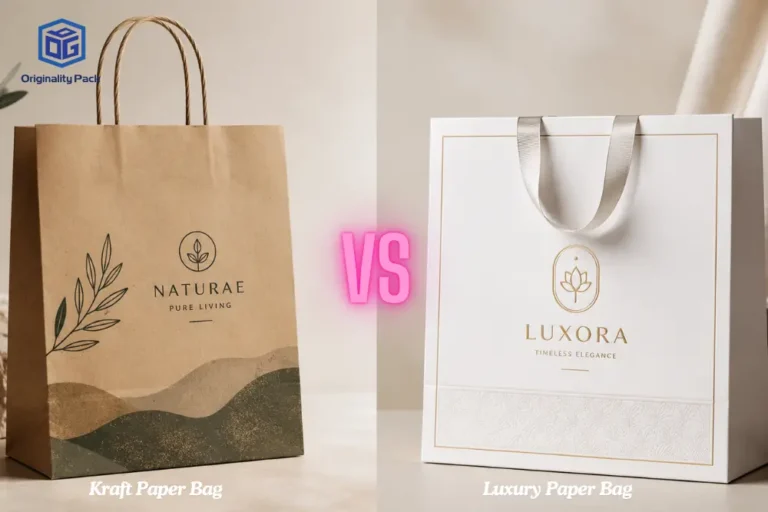
Many buyers compare a kraft paper bag with a luxury paper bag as if the decision is simply low-end versus high-end. In real packaging production, that is too simple. The same kraft material can appear in both practical shopping bags and premium retail bags, depending on GSM, structure, handles, and finishing. If you want a closer look at how each paper weight performs in real use, our Paper Bag GSM Guide breaks down 130gsm to 300gsm side by side.
A kraft paper bag is a retail or takeaway paper bag made from brown or white kraft paper, usually chosen for practical carrying strength, natural appearance, and high-volume store use.
In daily retail and food-service projects, a kraft paper bag usually points to a 130-150gsm brown kraft or white kraft bag. The goal is daily circulation: carrying products from the store to the customer, supporting large-volume ordering, and keeping packaging cost practical. You see this kind of kraft shopping bag in takeaway food, supermarket-style retail, bookstore bags, and large apparel chains. In other words, these are paper shopping bags for retail use where daily practicality matters more than gift-style presentation.
A luxury paper bag is usually a cardboard paper retail bag designed as part of the product’s presentation, typically made from white cardboard paper, specialty cardboard paper, or thick kraft paper around 250gsm and finished with features like foil stamping, embossing, reinforced structure, or fabric handles.
This matters when the bag needs to support the product’s perceived value. Details such as a reinforced top fold, bottom board, rope handle, ribbon handle, foil stamping, embossing, debossing, or tighter print control can make the bag feel closer to a retail gift item than a simple carrier. If a brand wants the natural look of kraft paper but still wants a heavier, more premium bag, that project belongs closer to a kraft cardboard paper bag than to a basic takeaway kraft bag.
When a 130-150gsm Kraft Paper Bag Is the Right Choice
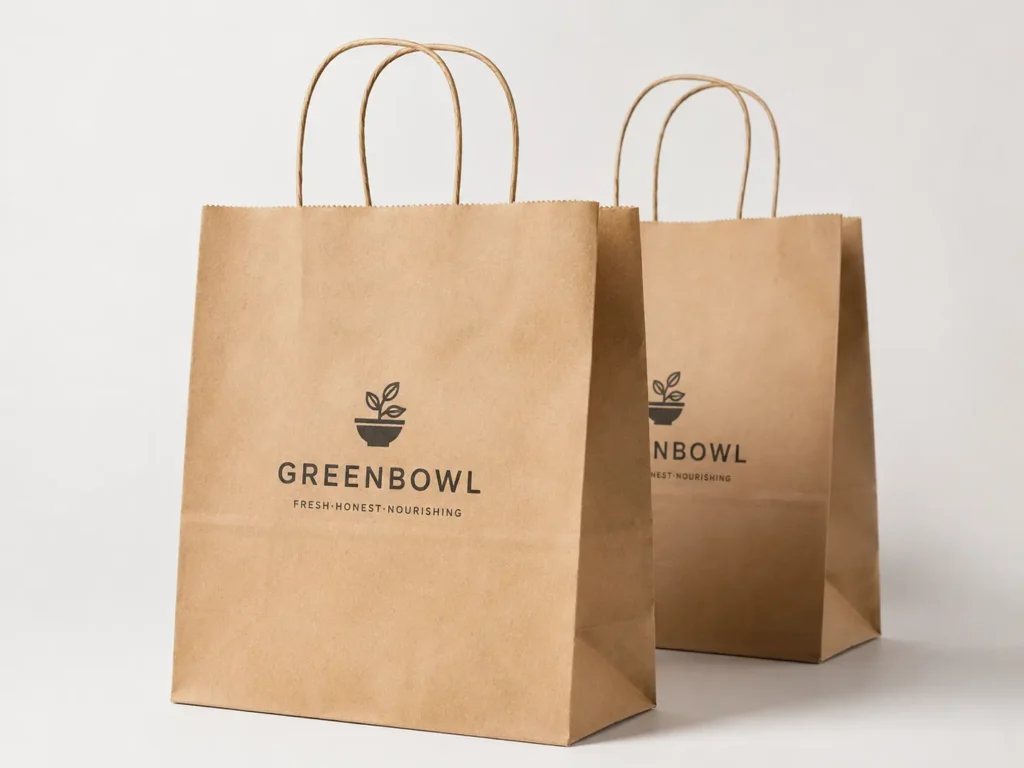
A 130-150gsm kraft paper bag is a lightweight retail or takeaway bag used when brands need a practical, cost-controlled carrier for daily shopping, food service, or high-volume store orders.
This bag type is not a lower-quality choice by default. It is designed for a different retail moment. For takeaway food, bakery packaging, pharmacy bags, grocery-style use, large chain stores, and everyday apparel retail, the customer usually needs a clean carrier bag rather than a gift-like packaging piece.
This type of bag is suitable when the product is not extremely heavy, the customer will carry it for a short time, and the brand wants a natural or simple retail look. Brown kraft gives a more organic and casual feeling. White kraft looks cleaner and brighter while still staying lighter and more practical than a heavy luxury bag.
The trade-off is that a lightweight kraft paper bag has limits. It may not support heavy products without reinforcement. It may not hold a very sharp luxury structure. It also has printing limits, especially on brown kraft paper. Light colors, white ink, and bright logo colors may not appear as cleanly as they do on white cardboard paper. If the brand depends heavily on exact color control, a basic kraft bag may create disappointment during sampling.
Brown Kraft vs White Kraft: Which Look Fits Your Retail Brand?
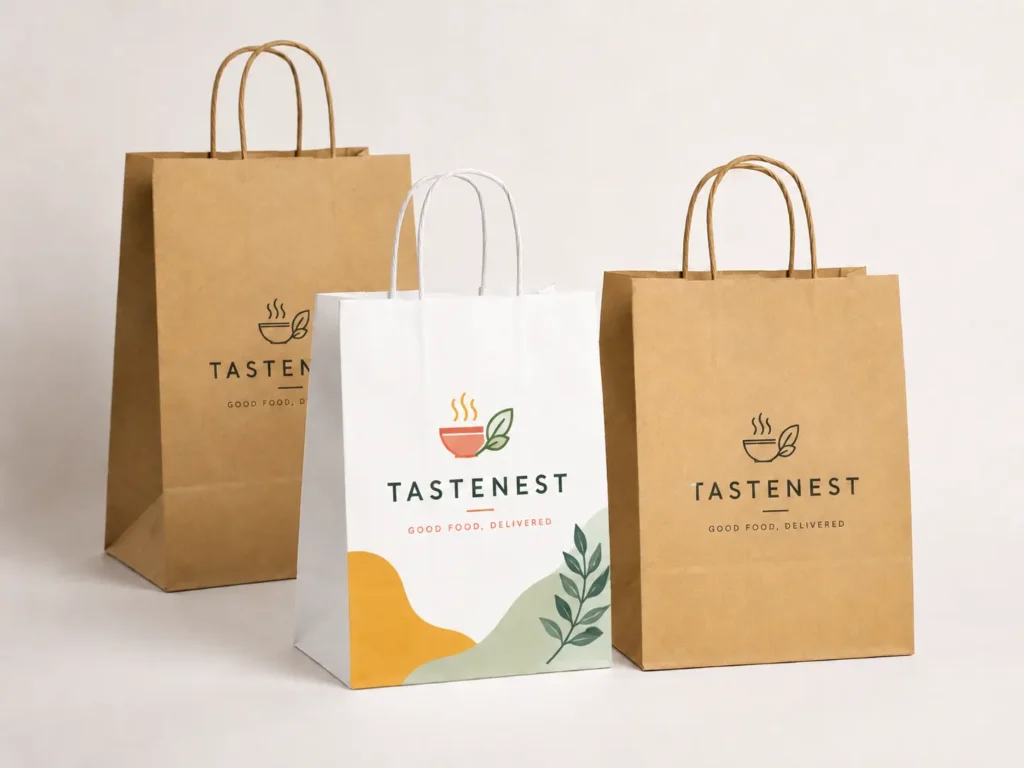
Brown kraft and white kraft are both common for retail paper bags, but they communicate different brand signals.
Brown kraft paper feels natural, casual, handmade, organic, and everyday. It works well for bakery, takeaway, coffee alternatives, grocery, local retail, simple apparel, handmade goods, and brands that want a warm, raw material feeling. It is also a familiar choice when the brand wants packaging that looks practical rather than decorative.
White kraft paper feels cleaner and more minimal. It can fit fashion basics, beauty samples, bookstore retail, simple gift stores, and large retail chains that want a brighter background for logo printing. White kraft is still more practical than a full cardboard paper bag, but it can make the design look more controlled than brown kraft.
From a factory perspective, brown kraft is less forgiving for color. A black, dark green, navy, or single-color logo can look strong. But pale pink, light beige, gold-like yellow, or full-color artwork can lose clarity because the paper base affects the final print. White kraft gives the artwork a cleaner base, although it still does not behave like white cardboard paper. For printed kraft paper bags, the paper base should be treated as part of the color result, not just a neutral background.
Printing and Color Control: Avoid This Common Quote Mistake
A white cardboard paper bag is a structured retail paper bag made from white cardboard paper, normally around 250gsm, and used when a brand needs cleaner full-color printing, stronger stiffness, and a more polished luxury presentation.
Color is one of the easiest places for retail paper bag projects to go wrong. Brown kraft paper naturally darkens or warms the printed result, so light logo colors may look muted. White kraft gives a cleaner base, but it is still not the same as white cardboard paper. A white cardboard paper bag is usually better when the project needs Pantone control, full-color artwork, beauty packaging, fashion branding, or a smoother luxury finish.
Foil stamping, embossing, and debossing can work very well for premium but restrained branding. A simple black logo, blind embossing, copper foil, or deep green print on thick kraft paper can look refined without turning the bag into a full-color white cardboard paper bag. But if the logo color is important, a physical sample is strongly recommended before mass production.
This is especially important for branded paper bags for retail stores that also use boxes, tissue paper, stickers, hang tags, or labels. Different materials absorb ink differently, so color consistency should be managed before production. For a deeper explanation, see packaging color consistency and batch variation.
When Retail Brands Should Upgrade to a Luxury Paper Bag
A luxury paper bag is worth considering when the bag needs to support the customer experience, not only carry the product. This usually applies to boutique fashion, jewelry, cosmetics, skincare, fragrance, candles, premium gifts, events, and higher-price retail products.
The upgrade makes sense when the customer is likely to notice the hand feel, keep the bag, reuse it, photograph it, or associate it with the product value. In these situations, a thin bag can make the brand feel underbuilt even if the product itself is good. A heavier bag with a better handle and reinforced structure helps the packaging match the product price.
Custom luxury paper bags also allow more finishing options because they are usually built as cardboard paper bags rather than lightweight shopping bags. Foil stamping can create a cleaner logo highlight. Embossing or debossing can make a simple design feel more tactile. Rope, cotton, or ribbon handles can change the entire impression of the bag.
However, these options also increase cost, sampling complexity, and production time. A buyer should not upgrade only because the word “luxury” sounds better. The upgrade should match the product margin and retail positioning. For a full walkthrough of sizing, finishing, and paper choices, see our ultimate guide to custom luxury paper bags
How 250gsm Kraft Paper Becomes a Cardboard Luxury Paper Bag
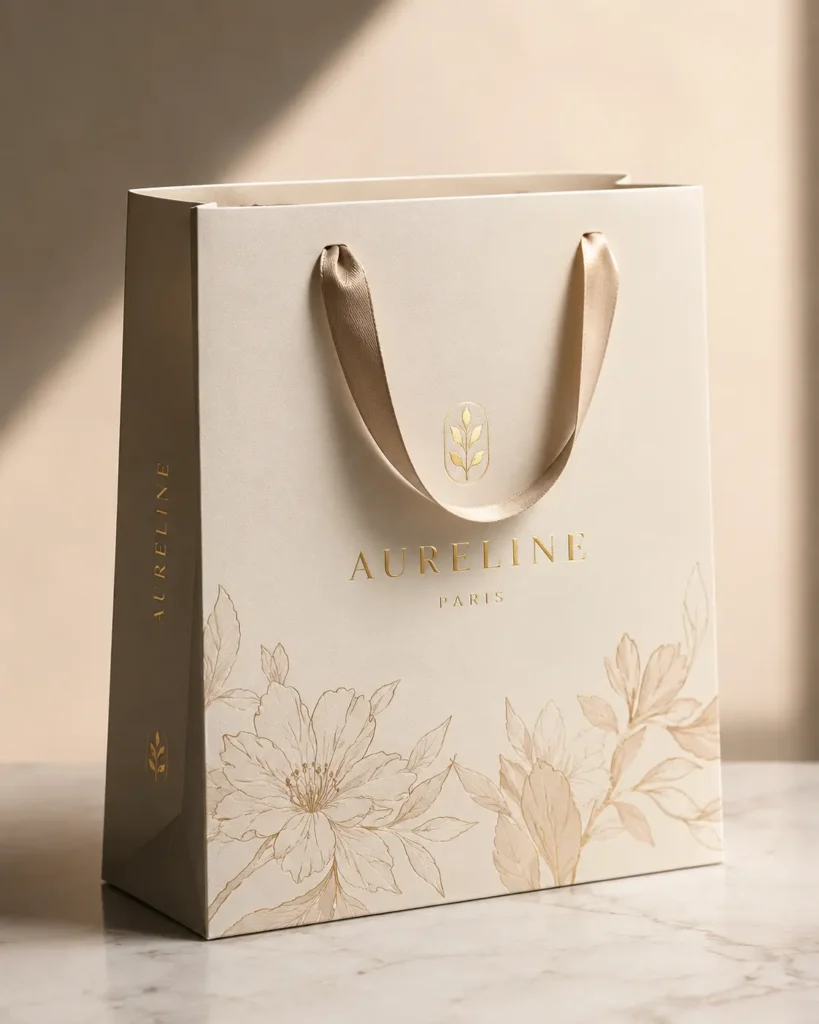
A 250gsm kraft cardboard paper bag is a premium retail bag made from thicker kraft paper, designed to keep a natural paper look while adding stronger structure, better hand feel, and boutique-level presentation.
This option is useful when a brand wants an environmentally aware, natural, or understated look, but still needs a stronger boutique structure. Instead of moving to white cardboard paper for color printing, the brand can keep the kraft material direction and upgrade the paper weight, handle, and reinforcement.
A 250gsm kraft paper bag can feel much more substantial than a normal 130-150gsm kraft shopping bag. When combined with a reinforced top fold, bottom board, stronger side gusset, and better handles, it becomes closer to a premium retail bag. The surface still has the natural kraft feeling, but the structure no longer feels like a takeaway bag.
This is especially useful for eco-positioned premium brands that want the package to feel intentional without looking glossy. A skincare brand, boutique clothing label, candle brand, gift shop, or sustainable fashion brand may choose thick kraft paper when the bag needs to feel stronger than a daily shopping bag but quieter than a white cardboard paper bag.
The trade-off is that thicker kraft paper does not automatically solve every design need. If the artwork requires very bright colors, large photo printing, or a highly polished white background, white cardboard paper may still be better. If the brand wants simple dark printing, blind embossing, debossing, black foil, copper foil, or a restrained logo, thick kraft paper can look refined without losing its natural character. For a deeper comparison of how 150gsm, 250gsm, and heavier papers hold up in production, see our GSM thickness guide.
Kraft Paper Bag vs Luxury Paper Bag Comparison Table
| Comparison | 130-150gsm Kraft Paper Bag Practical & Cost Efficient | 250gsm Kraft Cardboard Paper Bag Natural Premium Look | White Cardboard Paper Bag Premium Brand Presentation |
|---|---|---|---|
| Best Use | Takeaway, grocery, daily retail, and large store shopping bags. | Premium natural retail, boutique apparel, and eco-positioned gifts. | Fashion, jewelry, cosmetics, gifts, and premium events. |
| Brand Impression | Practical, natural, casual, and suitable for high-volume retail. | Natural appearance with stronger structure and a more intentional premium feel. | Refined, polished, boutique, and gift-ready presentation. |
| Paper Feel | Lightweight and flexible for everyday retail use. | Thicker paper with stronger structure and better hand feel. | Clean white surface with stronger print control and premium texture. |
| Printing Effect | Best for simple dark logos or basic artwork. | Good for restrained premium branding and selected special finishes. | Better for full-color artwork, accurate brand colors, and polished finishes. |
| Handle Options | Twisted paper handle, flat handle, and die-cut handle. | Rope, cotton, ribbon, or reinforced paper handle options. | Rope, ribbon, cotton, satin, and custom handle options. |
| Cost Level | Lower to medium depending on size, material, and quantity. | Medium investment due to thicker paper and stronger structure. | Higher investment when adding lamination, foil, embossing, or specialty handles. |
| Suitable Brands | Food service, large retail chains, basic apparel, and daily-use retail. | Premium eco brands, boutique clothing, candles, skincare, and gift shops. | Luxury fashion, beauty, jewelry, high-end retail, and event gifting. |
Need help choosing between 130-150gsm kraft, 250gsm kraft cardboard, and white cardboard paper? Send us your bag size, product type, approximate product weight, quantity, and delivery country. We can recommend a practical kraft paper bag or cardboard luxury paper bag structure before you move into sampling.
Cost and MOQ: Why Thicker Bags Are Not Just "A Little More Paper"
Many buyers ask whether they can simply change a 150gsm kraft bag to 250gsm kraft paper. In production, the cost difference is not only the paper weight. A thicker bag may need a different structure, stronger glue areas, reinforced top fold, bottom board, and different handle installation. MOQ requirements can also shift depending on material, printing method, and finishing complexity. The final carton size and shipping weight can also increase.
Sampling may also become more important. For a simple 130-150gsm kraft shopping bag, a digital proof or basic sample may be enough for many projects. For a premium kraft luxury paper bag, buyers usually need to check stiffness, handle comfort, bottom strength, logo placement, and surface effect before mass production. See our ordering and sampling process for what to expect at each step.
Factory Recommendation: Start With Product Use, Not Only GSM
If you are not sure which paper weight to choose, do not start the inquiry by asking only for a material price. Start with the product weight, bag size, retail use, target product price, and brand style. A factory can then judge whether the project fits 150gsm kraft paper, 250gsm kraft cardboard paper, white cardboard paper, or another structure.
For example, a bakery bag and a boutique skincare bag may both use kraft paper, but the structure should not be the same. The bakery bag may need practical carrying strength and cost control. The skincare bag may need thicker paper, a cleaner handle, better logo placement, and a sample to confirm the final hand feel.
If the project includes Pantone color matching, foil stamping, embossing, ribbon handles, rope handles, or strict brand color requirements, request a physical sample before bulk production. The goal is not only to confirm how the bag looks, but also to check stiffness, handle comfort, bottom strength, printing position, and packing method.
Sustainability Claims Need the Right Material Details
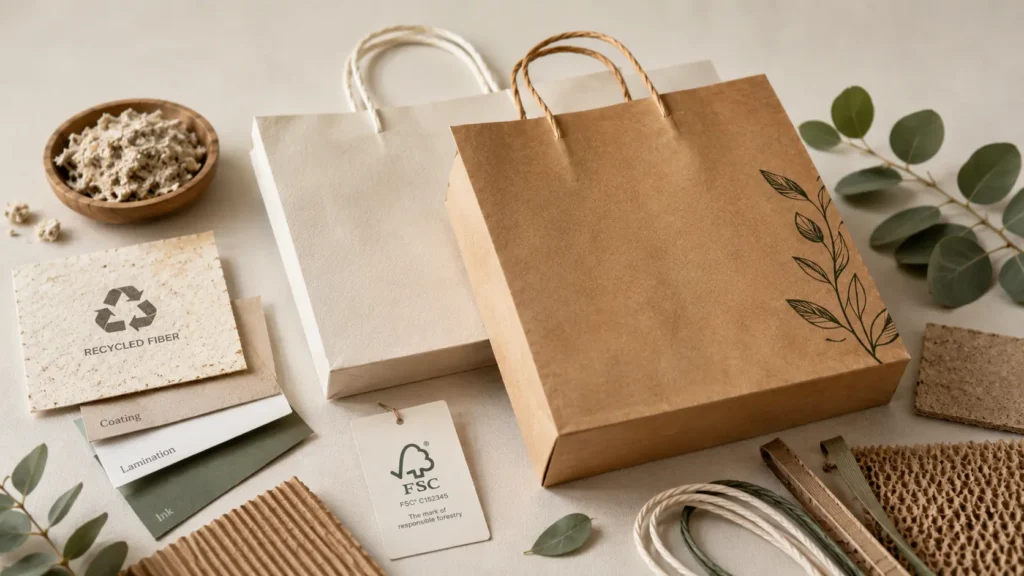
Kraft paper often gives customers a natural and responsible impression, but brands should be careful with sustainability wording. A bag is not automatically more sustainable just because it is brown. The paper source, recycled content, coating, lamination, ink, handle material, and local recycling system all matter.
For paper sourcing, the Forest Stewardship Council explains that FSC 100%, FSC Recycled, and FSC Mix labels refer to different material sources, including certified forests, recycled materials, and controlled sources. If a brand wants to make responsible sourcing claims, it should confirm which material and certification can actually be supplied for the project.
Paper bags should also be designed for reuse when possible. The Paper Bag platform encourages consumers to reuse paper bags and recycle them after their final use. For premium retail, a thicker cardboard paper bag may be more likely to be reused by the customer because it feels stronger and more intentional. But if the bag includes heavy lamination, mixed materials, or decorative accessories, recyclability may become less straightforward.
The European Paper Recycling Council reported that the recycling rate for all paper products reached 75.1% in 2024.
Common Mistakes Brands Make When Choosing Retail Paper Bags
Thinking all kraft paper bags are low-end
A lightweight kraft takeaway bag and a thick kraft cardboard paper bag can both use kraft paper, but they belong to different product levels. The paper type is only one part of the decision.
Using a 130-150gsm bag for a product that needs stronger presentation
If the product is high-value, heavy, giftable, or sold in a boutique setting, a basic kraft bag may feel underbuilt. The customer may not know the GSM, but they will feel the difference in stiffness and handle quality.
Expecting bright logo colors on brown kraft paper
Brown kraft changes how ink appears. If the brand color must be clean, bright, and close to a Pantone reference, white kraft or white cardboard paper may be safer. No responsible factory should promise perfect color consistency across every paper type and production process.
Choosing luxury finishing without checking lead time
Foil stamping, embossing, debossing, rope handles, ribbon handles, and special paper can improve the retail impression, but they also add production steps. If the deadline is tight, simplify the structure before adding decoration.
Comparing prices before defining the bag's job
A cheaper bag is not always better if it weakens the product presentation. A more expensive bag is not always better if the product is a daily-use item and customers only need a simple carrier. The correct bag is the one that matches the retail moment.
Which Paper Bag Works Best For Your Business?
Different brands need different levels of structure, printing quality, and presentation.
What to Prepare Before Asking for a Quote
Before requesting a quote for custom paper bags with logo, prepare the information a factory needs to judge the correct structure:
Paper Bag Quote Checklist
Prepare these details to help us recommend the right bag structure and provide an accurate quotation.
If you are not sure which GSM or handle type is suitable, do not start with the cheapest quote. Start with the product weight, retail channel, and brand level. A factory can then recommend whether the project should stay in a practical kraft shopping bag structure or move into a cardboard luxury paper bag structure.
Need Help Choosing The Right Paper Bag?
Not sure about the right paper weight, size, or handle style? Share your product details and we’ll recommend the best paper bag solution based on your brand positioning and retail needs.
Get Your Paper Bag RecommendationFinal Recommendation: Match the Bag to the Retail Moment
The right paper bag is not decided by material name alone. It should match product weight, retail price, store experience, printing expectations, and customer behavior.
A kraft paper bag is not automatically basic, and a luxury paper bag is not automatically the right upgrade. A 130-150gsm kraft paper bag is often the best choice for takeaway, grocery, large retail, and daily shopping because it is practical and cost-controlled. A 250gsm kraft cardboard paper bag is better when the brand wants natural material character, stronger hand feel, and a more premium retail experience. A white cardboard paper bag is better when the brand needs cleaner full-color printing.
If the customer only needs a simple carrier, keep the bag efficient. If the bag becomes part of the product experience, upgrade the structure.
As a paper bag manufacturer, Originality Pack helps overseas retail brands compare custom kraft paper bags, luxury paper bags, and branded retail shopping bags based on product weight, brand positioning, finish requirements, MOQ, and delivery timeline. If you are preparing a custom paper bag project, share your product type, size, quantity, and target retail use before locking the paper and handle structure.
FAQ
Not always. A simple 130-150gsm kraft paper bag is usually more cost-controlled than a cardboard luxury paper bag. But a 250gsm kraft bag with reinforced structure, rope handles, foil stamping, or embossing can move into the luxury paper bag cost range.
Many takeaway and daily retail kraft paper bags use around 130-150gsm paper, depending on size, handle type, product weight, and local supplier standards. Heavier products may need thicker paper or reinforced structure.
Yes. Kraft paper can look premium when the bag uses thicker paper, stronger structure, clean logo placement, suitable handles, and restrained finishing. A 250gsm kraft paper bag can function as a kraft version of a cardboard luxury paper bag for premium eco-positioned retail brands.
Choose brown kraft for a natural, casual, organic, or handmade feeling. Choose white kraft when you want a cleaner background, brighter logo visibility, or a more minimal retail look while keeping the practicality of kraft paper.
Yes. Around 250gsm kraft paper can be suitable for cardboard luxury paper bags when combined with reinforced top fold, bottom board, quality handles, and appropriate printing or finishing. It is a good option for brands that want both natural material character and stronger retail presentation.