
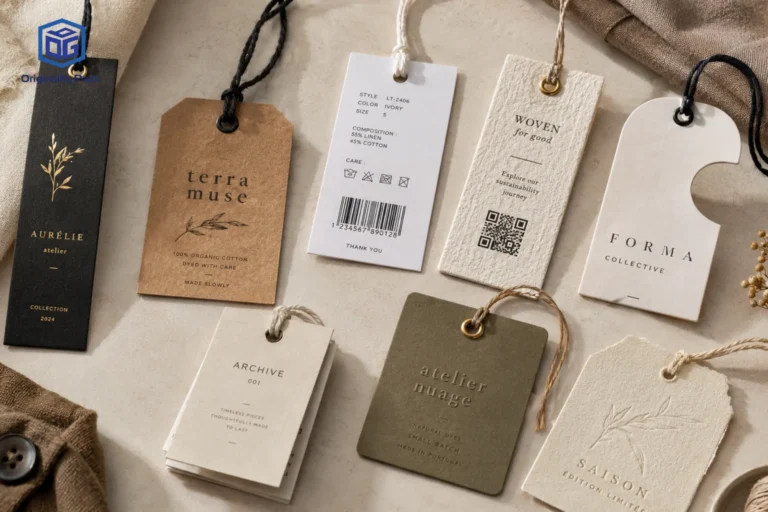
Quick Answer: Custom hang tags with string help clothing brands show pricing, size, barcode, care notes, and brand story at retail or ecommerce fulfillment. Before ordering, decide the paper material, thickness, string type, printing method, finishing, MOQ, barcode readability, and sample approval standard. Low MOQ is possible, but unit cost is usually higher because setup costs are spread across fewer pieces.
Table of Contents
A hang tag is small, but it carries many decisions. For a clothing brand, the tag is not only a price card. It may need to hold a logo, product name, size, barcode, QR code, material story, sustainability claim, care reminder, or retail sticker area. If the material feels weak, the string breaks easily, or the barcode cannot scan, the problem appears at the final customer-facing stage.
The safest way to order custom hang tag with string is to treat them as part of the full clothing packaging system, not as a last-minute accessory. Material, string, printing, finish, MOQ, and packing method all affect cost and production stability.
If the collection also needs woven, care or size labels, use our guide to planning clothing tags and labels as one set before confirming materials, quantities and sampling.
Which Custom Hang Tag Material Fits Your Clothing Brand's Price Point?
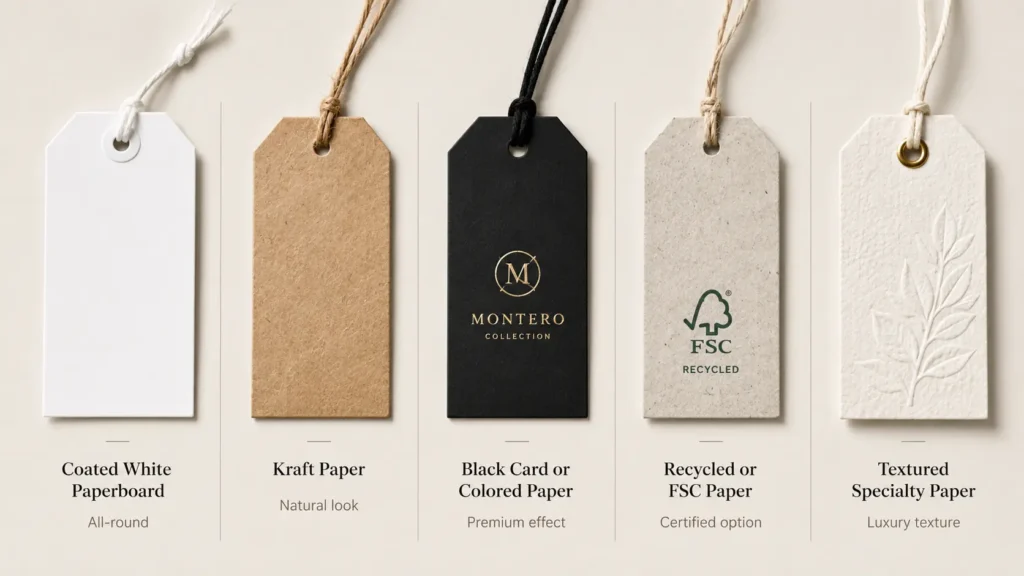
| Material | Best For | Print / Finish Fit | Trade-Off | Buyer Recommendation |
|---|---|---|---|---|
| Coated White Paperboard | Most clothing brands, ecommerce orders, and retail basics | CMYK, Pantone, barcode, QR code, matte lamination | Clean and reliable, but less textured than specialty paper | Best all-round choice Choose this when artwork detail, barcode clarity, and stable production cost matter. |
| Kraft Paper | Natural, casual, handmade, outdoor, or eco-positioned clothing brands | One-color printing, dark ink, simple logo design | White ink and bright colors may look less solid on kraft paper | Natural brand look Use this when the natural paper texture is more important than vivid color accuracy. |
| Black Card or Colored Paper | Premium fashion, accessories, boutique retail, and limited collections | Foil stamping, white ink, embossing, debossing | Full-color printing is limited, and production cost can rise | Premium visual effect Choose this for simple logos, metallic details, and high-contrast brand presentation. |
| Recycled or FSC Paper | Brands with documented sourcing, sustainability, or retailer compliance requirements | Simple print, natural tones, certification messaging | Texture, shade, and paper availability may vary by batch | Claim-sensitive option Use this only when your supplier can confirm the exact paper claim and related paperwork. |
| Textured Specialty Paper | Luxury apparel, giftable garments, boutique launches, and premium collections | Foil stamping, embossing, debossing, letterpress-style effects | Higher MOQ, longer sourcing time, and higher color variation risk | Luxury touch Best for premium projects where texture and hand feel matter more than low unit price. |
Factory Recommendation
If your tag includes a barcode, QR code, SKU, price, or small product information, start with coated white paperboard instead of textured or dark paper. It gives better scan readability and more stable print results for apparel retail projects.
Which String Type Works Best for Custom Clothing Hang Tags?
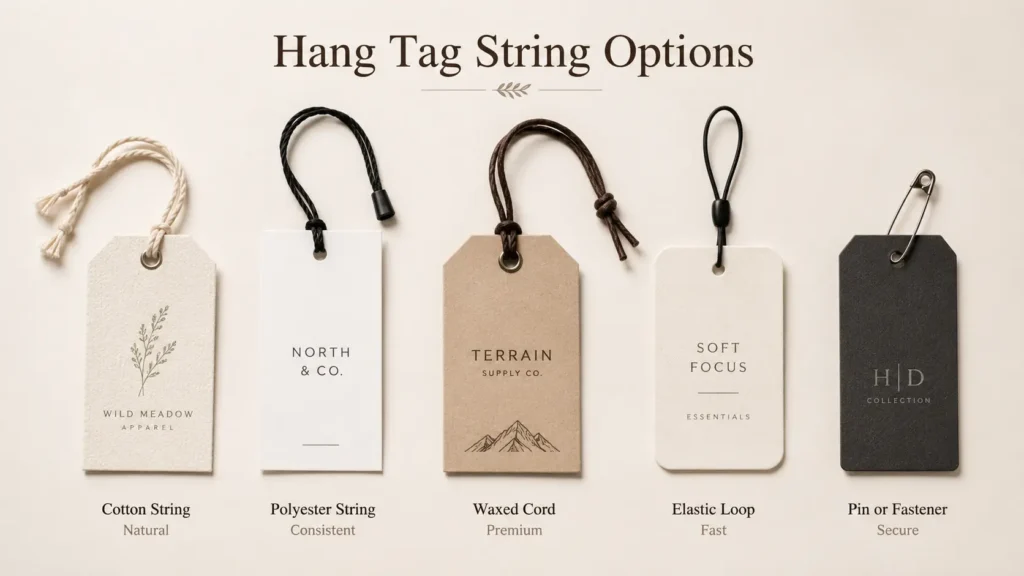
Cotton String
Cotton string is a good fit for soft, natural, casual, or boutique clothing brands. It feels approachable and works well with kraft paper, white paperboard, and simple apparel hang tag designs.
Boutique apparel, casualwear, handmade clothing, natural brand positioning.
Soft hand feel and natural appearance, especially for kraft or minimal hang tags.
It may look less sharp for luxury black-card tags or very polished retail displays.
Polyester String
Polyester string is practical for larger runs, repeat orders, and clothing brands that need more stable color matching across multiple production batches.
Larger apparel orders, ecommerce clothing, retail basics, and repeat production.
Clean appearance, flexible color options, and easier consistency for bulk orders.
It may feel less natural than cotton if your brand positioning is handmade or organic.
Waxed Cord
Waxed cord works well for premium apparel, accessories, boutique retail, and higher-price garments. It holds its shape better and gives the hang tag a more polished presentation.
Premium apparel, accessories, boutique collections, black card, and foil-stamped tags.
More structured than basic string, with a cleaner and more premium visual effect.
Usually costs more than basic cotton or polyester string and may need sample checking.
Elastic Loop
Elastic loops are useful when the tag needs to attach quickly during packing. They can improve fulfillment efficiency, especially when the attachment point is fixed and repeatable.
Ecommerce apparel, accessories, socks, folded garments, and high-volume packing.
Quick to attach, easy to handle, and efficient for packing teams.
It may not fit every garment style, especially delicate fabrics or premium display pieces.
Pin or Fastener
Pins or fasteners are suitable for retail garments that need secure attachment and stable display. They can look professional, but the fabric type must be checked before use.
Retail garments, rack display, showroom samples, and products that need secure tagging.
Strong attachment and professional retail presentation during handling and display.
Not ideal for delicate fabrics because pins or fasteners may leave marks or damage fibers.
For more attachment options, see Originality Pack’s hang string page. If you need both tags and strings, it is usually easier to confirm the hole size, string length, and knot style together instead of sourcing them separately.
Which Printing Options Are Worth Paying For on Apparel Hang Tags?
| Option | When It Is Worth Paying For | Production Impact | Trade-Off |
|---|---|---|---|
| CMYK Printing | Best for full-color artwork Use this for full-color designs, images, gradients, seasonal artwork, and general brand graphics. | Standard printing setup, suitable for most custom apparel hang tag orders. | Color may vary slightly across paper types, finishes, and production batches. |
| Pantone Printing | Best for brand color control Use this when your logo or brand color needs tighter control than standard CMYK printing. | Requires more color management and clearer color references before production. | Better consistency, but not a 100% match guarantee across different materials. |
| Foil Stamping | Best for premium logos Use this for luxury logos, metallic details, black cards, and simple premium brand marks. | Adds tooling, setup, and an extra finishing step during production. | Creates an elegant effect, but increases cost, lead time, and sample checking needs. |
| Embossing / Debossing | Best for tactile branding Use this for minimal logos, luxury apparel tags, and designs where touch matters. | Requires tooling and works best with suitable paper thickness and simple artwork. | Small details may not show clearly, and the effect depends heavily on paper structure. |
| Spot UV | Best for gloss contrast Use this when you want selected areas to stand out against a matte background. | Needs accurate registration between the printed artwork and UV layer. | Strong visual effect, but very small details or thin lines can be difficult to control. |
| Matte Lamination | Best for smoother touch Use this when the hang tag needs a smoother surface, better handling feel, and light protection. | Adds a surface finishing layer after printing. | Improves feel, but can increase cost and may affect recyclability depending on the material. |
If color is important, review how color behaves across packaging materials before approving artwork. A logo can look different on hang tags, paper bags, tissue, stickers, woven labels, and care labels because the materials and printing methods are different. This guide on custom packaging color consistency explains the issue in more detail.
Planning custom hang tags with string for a clothing line?
Originality Pack can help check your tag size, paper thickness, barcode area, string type, artwork, and MOQ before quoting, so production risks are easier to catch before bulk order.
What Should You Check If Your Custom Hang Tag Needs a Barcode or QR Code?
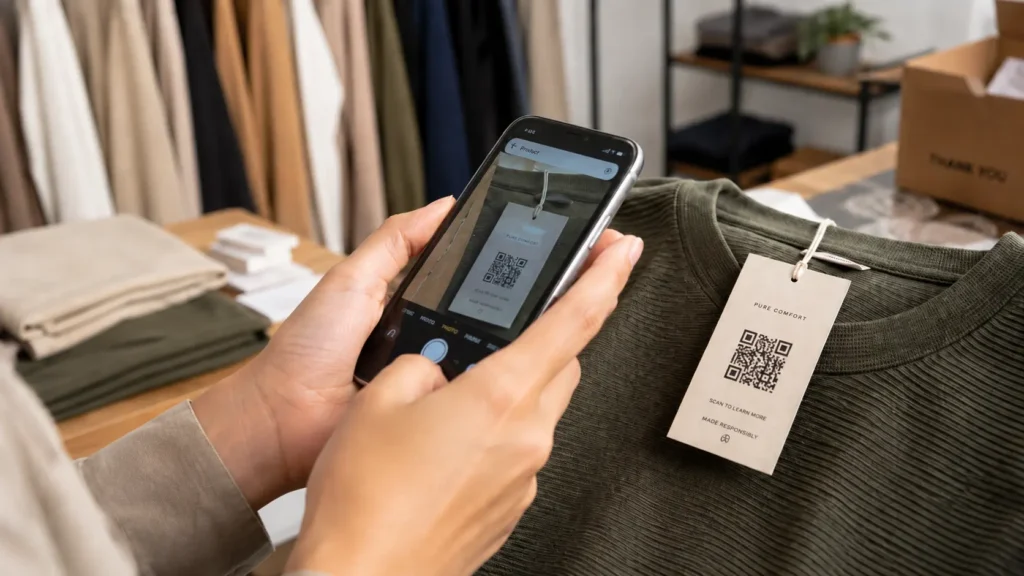
A barcode or QR code on a custom hang tag should be treated as functional retail information first and design decoration second.
- Use strong contrast for barcode and QR areas.
- Avoid foil stamping, dark backgrounds, or heavy texture behind scan codes.
- Check small text at actual printed size, not only on screen.
- Scan the sample with the devices your team or retailer will use.
- Keep variable SKU or price sticker areas clean and practical.
Why Low MOQ Custom Hang Tags Usually Cost More Per Piece
What to Check Before Approving Custom Hang Tags with String Samples
Custom Hang Tag Sample Approval Checklist
Use this checklist before approving custom hang tags with string for bulk production. A sample should confirm not only the logo, but also the material, attachment, finishing, barcode, and packing method.
Need help checking your hang tag sample?
Send your tag size, artwork, string choice, barcode area, and sample photos. Originality Pack can help review the setup before bulk production.
How to Keep Apparel Hang Tags Consistent with Bags, Labels, Tissue, and Cards
Common Mistakes Clothing Brands Make When Ordering Hang Tags
- Choosing paper that is too thin. Thin tags may save cost, but they can curl, bend, or feel weak on higher-price garments.
- Putting a barcode on a dark or textured background. It may look acceptable in a digital mockup, but it can fail during retail scanning or warehouse receiving.
- Expecting exact color across every packaging item. Paper bags, hang tags, tissue, stickers, and labels use different materials and processes.
- Sending artwork without bleed. This can cause white edges after cutting.
- Ignoring hole position. A hole too close to the edge can tear more easily.
- Requesting very low MOQ with many finishes. Foil, embossing, specialty paper, and custom strings all add setup pressure and can push the unit price higher than expected.
- Sourcing tags and strings separately without checking fit. The hole size, cord thickness, string length, and attachment method may not match during packing.
- Skipping the sample for premium tags. Screen previews cannot show stiffness, texture, or finishing accuracy.
Why Order Custom Hang Tags with String from Originality Pack?
- The factory team can check paper thickness, hole size, string length, barcode area, and finishing before production.
- Low MOQ options are available for simple custom hang tag projects.
- Samples can help confirm stiffness, print color, string fit, and barcode readability before bulk order.
- Coordinating multiple apparel packaging items with one plan can reduce mismatched colors, timing gaps, and supplier communication issues.
What to Send a Factory for an Accurate Hang Tag Quote
Hang Tag Quote Request Checklist
Prepare these details before asking for a custom hang tag quote. The more complete the information is, the easier it is to receive accurate pricing, material recommendations, and production lead time.
Ready to prepare your custom hang tag order?
Send your checklist details to Originality Pack, and our team can recommend a practical hang tag setup before production.
Not sure which material, string, or finish fits your clothing brand?
Send your artwork, quantity, and garment type. Our team can recommend a practical custom hang tag setup before production.
FAQ
Send editable AI, PDF, or PSD artwork when possible, plus logo files, Pantone or CMYK colors, barcode or QR code files, tag size, bleed, and any dieline or reference sample photos.
Many apparel hang tags use a practical range around 300-400gsm paperboard. Lighter paper can feel weak, while thicker specialty boards cost more and may need extra production checks for punching, stringing, and finishing.
Yes, low MOQ is possible for many simple hang tag projects. The trade-off is unit price. Setup, cutting, printing, and string attachment costs are spread across fewer pieces, so a 300-piece order usually costs more per piece than a 3,000-piece order.
Cotton string works well for natural and boutique apparel, polyester string is practical for repeat production, waxed cord fits premium garments, and elastic loops can improve packing efficiency. The best choice depends on fabric type, retail handling, and brand style.
Yes. Leave enough space, keep strong contrast, avoid textured or metallic backgrounds behind the code, and test scanning on a physical sample before bulk production.
Foil stamping can increase cost, setup requirements, and production time because it adds tooling and an extra finishing step. It is usually worth considering for premium logos, but less necessary for basic retail tags.
Yes. Ordering hang tags and strings together makes it easier to match hole size, cord thickness, string length, color, and attachment method before production.
Send editable AI, PDF, or PSD artwork when possible, plus logo files, Pantone or CMYK colors, barcode or QR code files, tag size, bleed, and any dieline or reference sample photos.
Conclusion
If you are preparing a clothing tag order, share your size, quantity, material preference, artwork, string choice, finish, and delivery country before asking for a quote. Originality Pack can help review custom hang tags, strings, and related apparel packaging components before production. You can contact the team here: request packaging guidance.