
Quick Answer
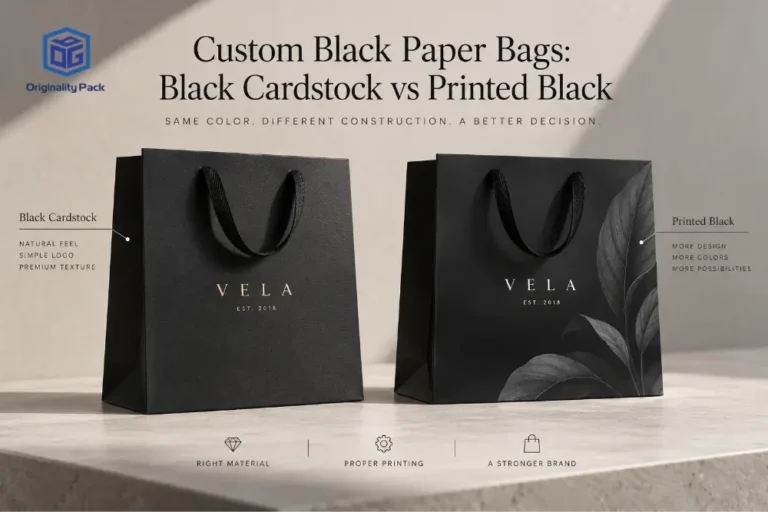
For custom black paper bags, choose black cardstock with screen printing when a simple logo and the paper's own feel are the priority. Choose white card printed black when you need multicolor graphics, gradients, photographs, or more detail. For a matte printed-black surface, use anti-scuff matte lamination to reduce visible scuffs. Check black-stock color-transfer risks separately, then confirm foil or spot UV details on a physical sample.
Two bags can look equally black in a digital mockup while needing different production decisions. The material affects what can be printed, how the surface feels, and which risks deserve attention before the order is approved. For a brand buyer, the useful question is not simply which bag looks more luxurious. It is which construction fits the artwork and remains acceptable when packed, stored, and carried.
Black Cardstock or Black-Printed White Card: Which Fits Your Design?
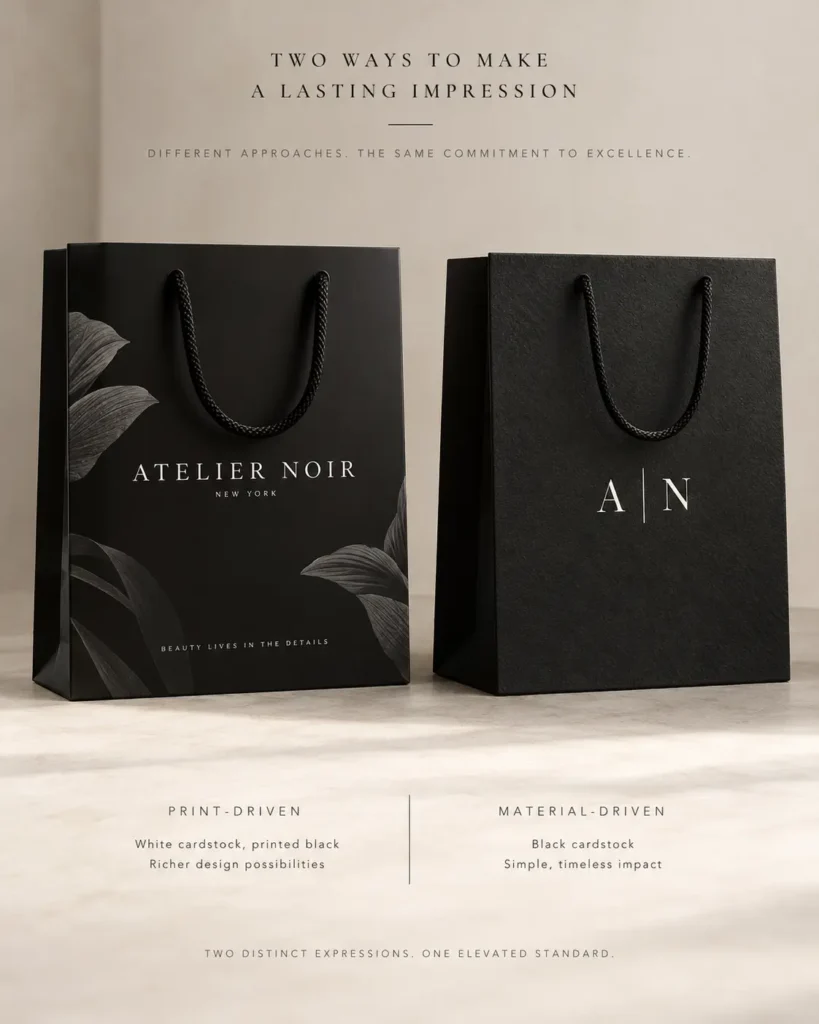
In this comparison, “printed black” means white card printed with a black background and finished with exterior lamination. The other route starts with black cardstock and adds screen-printed artwork. These are not the only production routes, and black cardstock is not limited to screen printing; the suitable method depends on the stock and design.
| Decision | Black cardstock + screen printing | White card printed black + lamination |
|---|---|---|
| Main reason to choose it | The black paper itself is part of the intended feel and presentation. | The design needs more printing flexibility on a black background. |
| Artwork starting point | Relatively simple logos, text, and solid-color graphics. | Multicolor artwork, gradients, photographs, or more detailed graphics. |
| Priority risk to discuss | Paper quality, color transfer, and the feasibility of the screen-printed detail. | Visible surface scuffs, the specified film, and the final printed appearance. |
| Logo enhancements | Foil stamping for metallic contrast; spot UV for selective gloss. Review on the chosen stock. | Foil stamping for metallic contrast; spot UV for selective gloss. Review with the chosen film. |
Swipe horizontally to view the full table.
Need help choosing the right black paper?
- Tell us about your artwork, bag size, and estimated quantity.
Our team can recommend a suitable material and printing approach for your project.
Before approving screen-printed artwork, ask which details need simplifying and review those changes on the proof. In our production experience, the main constraints are color count, gradients, photographs, and very fine lines. Resolve any changes before sampling so the sample represents the artwork you intend to order.
Material choice also does not replace the basic bag specification. Set the size and handle construction around what the bag carries; our luxury paper bag customization guide covers those wider choices. This article focuses on the additional decisions created by a black material or printed black surface.
Ordering Black Cardstock Bags? Confirm the Material, Not Just the Price
Black cardstock should be selected for its material quality, not only its appearance in a photograph. Some lower-quality black stocks may lose color through rubbing or transfer color to the product inside. That is a different problem from a visible scratch on a laminated exterior.
Before comparing suppliers, explain what the bag will contain and whether the black paper will touch the product directly or only its inner box or wrapping. Color transfer is particularly relevant when the packed item has a light-colored surface. The contact arrangement belongs in the material discussion, not only in the final packing instructions.
A noticeably low quotation is a reason to confirm the specification, not proof that the material is poor. Quantity, dimensions, paper, handles, printing, and finishing can all change the quotation. Compare like-for-like details and ask which black stock is actually included. A supplier describing a bag simply as “black paper” has not yet explained enough for a meaningful material comparison.
OriginalityPack prioritizes black cardstock quality during material selection rather than treating the lowest price as the only criterion. For a black paper bag project, the proposed stock and how it contacts the contents should be part of the specification from the start.
Ask to see a physical sample of the proposed material and discuss the intended product contact. A screen image shows the appearance, not the paper’s behavior in use. Where color transfer would make the packaging unacceptable, discuss what evidence is needed before approving that stock.
Printing Black on White Card? Specify Anti-Scuff Matte Lamination
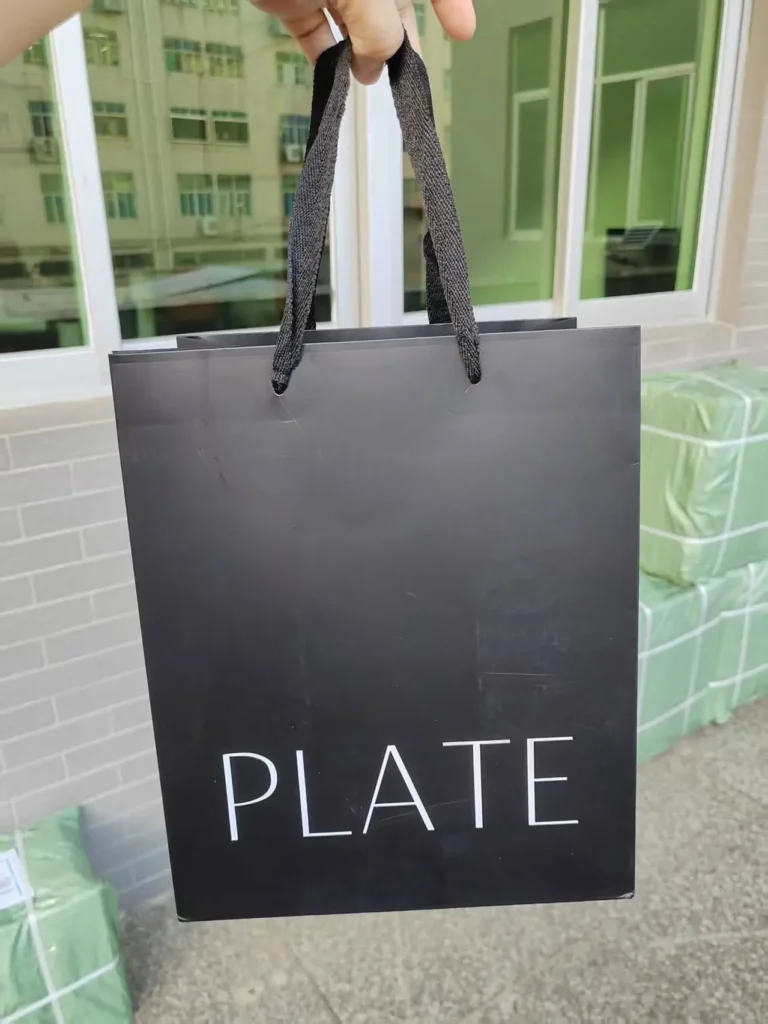
For white card printed black, anti-scuff matte lamination is our recommended starting point when you want a matte finish with fewer visible surface marks. In OriginalityPack’s production experience, scuffs on ordinary matte film are especially noticeable over a solid printed black background. Specify the anti-scuff option before the quotation and sample are finalized.
Ask for anti-scuff matte film, not just “matte lamination.” To compare the finishing options fairly, keep the paper, printed artwork, size, handles, and quantity the same. That makes the finish the decision variable instead of comparing two differently specified bags.
For the wider choice between sheen, scuff resistance, and tactile feel, compare our matte and gloss lamination options before confirming the film grade.
Film manufacturer Cosmo Films describes scuff-resistant matte lamination for marks that can develop during production, transportation, and handling, and lists shopping bags among its applications. Its specified films also support hot foil stamping and spot UV. This is a film-category reference; the actual film for your OriginalityPack project should be confirmed in the specification.
Anti-scuff means improved resistance to ordinary surface marking, not a scratch-proof bag. Anti-fingerprint performance and a velvety soft-touch feel are separate requirements. Request them specifically if needed, and review the finished sample. This film choice addresses exterior scuffs; black cardstock color transfer remains a separate material question.
Foil Stamping or Spot UV: Which Effect Should Your Logo Create?
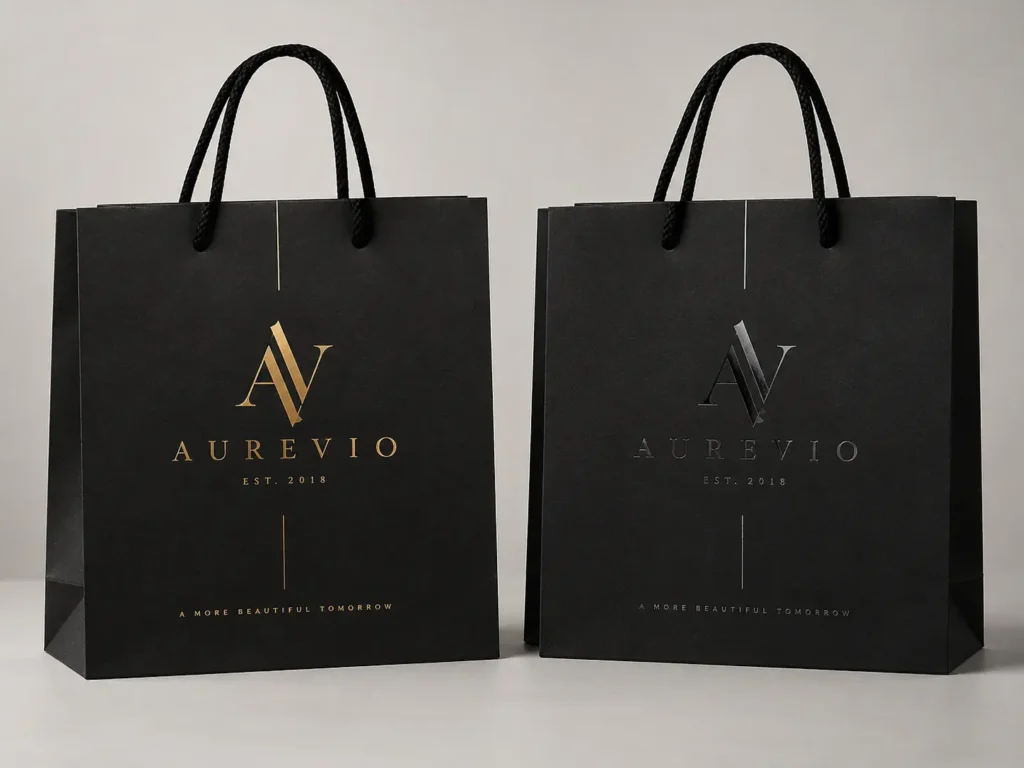
Foil stamping and spot UV are useful options for black paper bags, but they create different visual effects. Choose the effect after deciding the paper and printing route, then confirm the combination on the proposed surface.
Choose foil stamping when metallic contrast is the goal. A gold or silver foil logo creates a metallic accent against black. Review the logo’s fine detail and the selected foil on the proposed stock so the sample shows the effect you intend to order.
Consider spot UV when selective gloss is the goal. Unlike an all-over glossy finish, spot UV is applied to selected areas such as a logo or pattern. It can create a restrained gloss contrast, particularly against a matte surrounding surface. Inspect the sample under more than one viewing angle to decide whether that contrast is visible enough for your design.
OriginalityPack offers foil stamping and spot UV on both black cardstock and black-printed white-card projects. Confirm the artwork, treatment area, and material together: the chosen paper or film and the detail in the logo determine the combination to review in the sample.
What Should You Confirm Before Ordering Custom Black Paper Bags?
Turn the selected route into a written specification before giving production approval. The most useful checklist is short enough to use but specific enough to prevent “black bag with a logo” from meaning different things to buyer and supplier.
- Material route: State black cardstock with screen printing, or white card printed black, and identify the actual proposed stock.
- Artwork limits: Share the colors, gradients, photographs, fine lines, and small text that must be preserved. Confirm any simplification before approving the proof.
- Product contact: Explain what goes inside and whether it touches the black paper. Discuss color transfer where it could affect the product.
- Film specification: For a laminated route, name the finish rather than writing only “matte.” Confirm anti-scuff matte if that is the selected option.
- Decoration: Mark the foil and spot UV areas clearly and review their appearance on the chosen material.
- Approval scope: Confirm what the physical sample represents and whether its paper, printing, and finish match the intended bulk specification.
A digital proof helps confirm layout and text, but it cannot establish paper feel or color-transfer behavior. For a fuller review beyond the black finish, use our packaging sample approval checklist to distinguish artwork approval from material, structure, and production approval.
Ordering Snapshot: Check Quantity and Timing
OriginalityPack’s starting MOQ is 100 bags, subject to specification. For either route discussed here, confirm the minimum for your bag size, chosen stock, printing, and finishing complexity in the quotation.
- Sample planning range: Approximately 5–7 days, subject to specification and production scheduling.
- Bulk production planning range: Approximately 10–20 days, excluding shipping and subject to the confirmed project schedule.
- Material and finish pricing: Confirm the quotation for the selected stock, printing, film, and decoration; changing the route or finish requires a price review.
These are OriginalityPack planning ranges, not fixed delivery promises. Confirm the schedule for the actual stock and film—including specialty black cardstock or anti-scuff film—along with the quantity, finishing complexity, and current production schedule. Shipping time is additional and should be planned separately for the delivery country.
How OriginalityPack Helps Match the Material to Your Artwork
With 25+ years of packaging manufacturing experience, OriginalityPack helps buyers turn a design into a practical paper bag specification. For black bags, that means reviewing the artwork against the two printing routes, selecting suitable black stock or anti-scuff matte film, and discussing foil or spot UV alongside physical sample support.
Our custom luxury paper bags page covers the broader bag customization options. The useful next step is to agree on the material and artwork direction, then confirm what the proposed sample will represent before bulk production.
Choose the Route Before Approving the Artwork
The right custom black paper bag starts with the design requirement and the material—not the final decorative effect. Use black cardstock when its paper-led presentation fits the artwork and the proposed stock is suitable. Consider printed white card when the design needs more printing flexibility, and confirm anti-scuff matte lamination when everyday surface marks would undermine the intended matte look.
Then select foil or spot UV for the effect you actually want. Neither replaces material confirmation or a sample review.
Ready to check your black paper bag specification?
- In the quote form, describe your design and include your bag size, quantity, delivery country, and preferred material or finish.
OriginalityPack can review the selected direction, discuss the artwork and sample requirements, and prepare a quotation. If one detail is still undecided, say so in your project description.
Tell Us About Your Packaging Project
Share your packaging needs, and our team will recommend the right solution for your project.