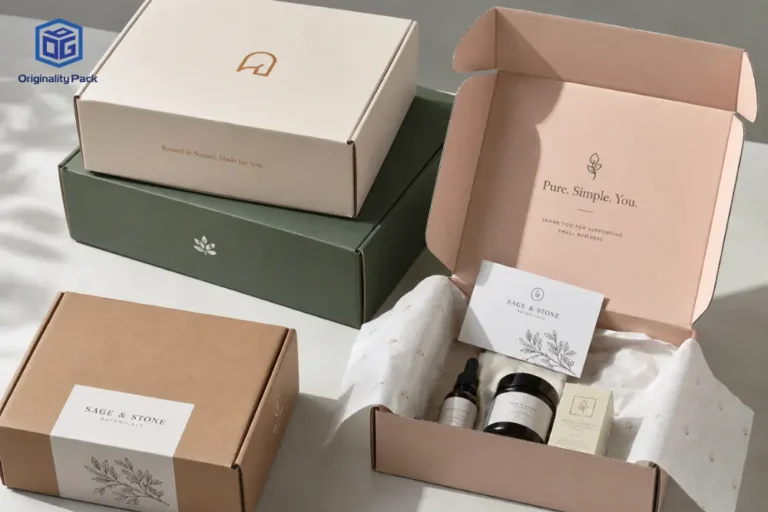
Custom mailer box packaging is a good choice for e-commerce brands that need a shippable box with brand presentation, product protection, and unboxing value. Before ordering, confirm your product size, box structure, corrugated strength, print design, MOQ, sample type, and shipping plan. The best mailer box is not always the thickest or most decorative; it is the one that protects the product without increasing cost, storage space, or dimensional weight unnecessarily.
Table of Contents
Brand Stage Recommendation: What Should You Order First?
Choose the Right Mailer Box Direction by Brand Stage
Select your current brand stage to see the recommended mailer box direction, why it works, and what should be avoided before production.
Simple kraft or white corrugated mailer with outside logo print
Keeps MOQ and setup cost more manageable while still creating a branded shipment.
Complex finishes, full inside printing, or too many box sizes before sales data is clear.
Custom size, stronger corrugated structure, outside and limited inside print
Improves product fit, repeat-order consistency, and customer presentation.
Oversized boxes that increase storage and shipping cost.
Printed inside/outside mailer with inserts, tissue paper, or product dividers
The unboxing sequence matters because the box is part of the product experience.
Choosing decoration before checking weight, structure, and packing efficiency.
Mailer box coordinated with tissue, stickers, cards, hang tags, or clothing packaging components
Helps keep brand color and packaging style more consistent across touchpoints.
Sourcing every component separately without checking material and color differences.
How to Choose the Right Mailer Box Size Before Ordering
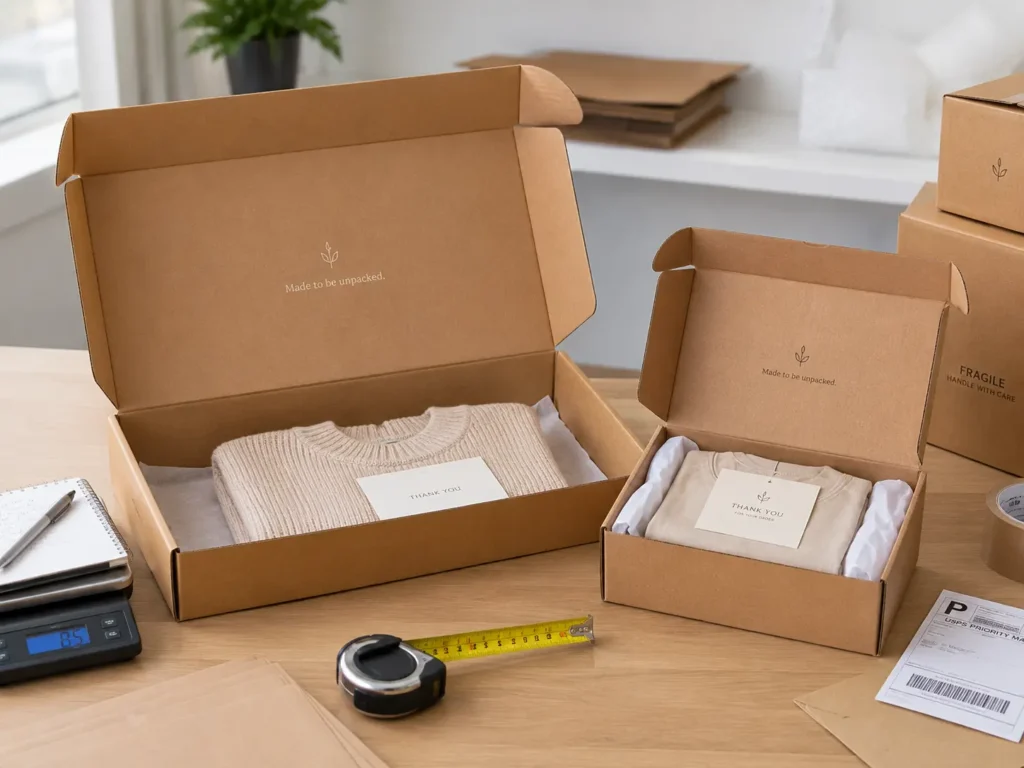
The right mailer box size should be based on the packed product, not the product alone. Measure the product after adding tissue paper, insert cards, protective wrap, dividers, or any inner packaging that will ship with it. A box that is too tight can crush corners or make assembly slow, while a box that is too large can increase filler use, storage space, and dimensional shipping cost. For a full walkthrough — including internal vs external dimensions, clearance allowances, and dimensional weight calculations — see our custom mailer box sizing guide.
Component Comparison: What Should Be Included in a Mailer Box Project?
A custom mailer box is rarely just a box. For many e-commerce brands, the final packaging system includes the outer mailer, custom printed tissue paper, printed cards, stickers, inserts, or protective dividers. Originality Pack’s custom mailer box page describes mailer boxes as lightweight corrugated packaging that can be printed inside and outside for clothing, accessories, beauty kits, gifts, and subscription businesses.
| Component | Use It When | Trade-Off |
|---|---|---|
| Corrugated mailer box | You need a shippable e-commerce box with branding and moderate protection. | Stronger board improves protection but may increase material cost and shipping volume. |
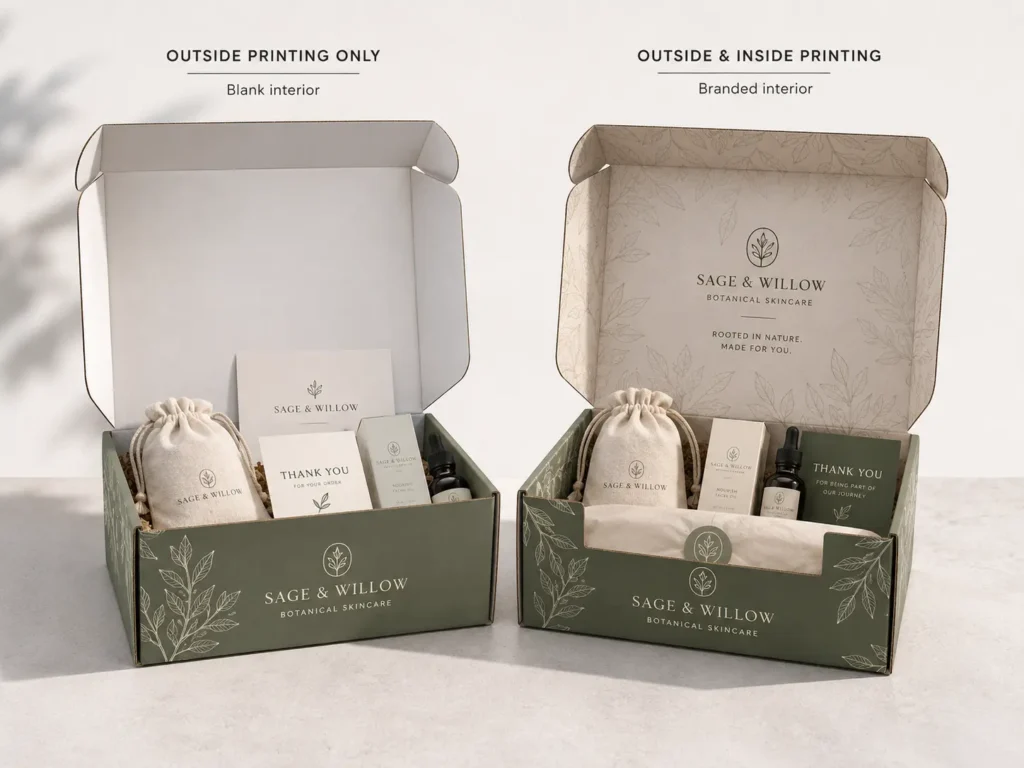
| Inside printing | The box opening is part of the customer experience. | Adds print area and cost; not always necessary for early-stage brands. |
| Tissue paper | You sell apparel, accessories, cosmetics, or gifts where presentation matters. | Improves reveal but adds packing steps and material cost. |
| Insert card | You need care instructions, brand story, discount code, or social prompt. | Low weight, but artwork and message should be ready before production. |
| Product divider or insert | You ship multiple items, jars, candles, or fragile products in one box. | Improves organization and protection, but requires more accurate product dimensions. |
Custom Printed Mailer Boxes: Inside vs Outside Printing
When It Makes Sense to Ask a Factory Before Finalizing the Design
Shipping Details: Why Box Size Can Cost More Than Box Weight
MOQ and Sampling: Why Low Quantity Usually Raises Unit Cost
For first orders, a physical sample is usually worth considering if the box size, structure, or print quality matters to the customer experience. A digital proof can check layout and text position, but it cannot fully confirm board feel, folding behavior, color on paper, or product fit. If the mailer box will be packed with custom thank you cards or tissue paper, include those components in the sample review instead of checking the box alone.
Kraft vs White Mailer Boxes: Choose Based on Print and Brand Positioning
Common Mistakes Brands Make Before Ordering Mailer Boxes
- Choosing the box before measuring the packed product. The correct size should include the product, inner wrap, insert, and protective space. If the order includes printed insert cards, confirm the card size before approving the dieline.
- Making the box too large for visual effect. Extra space can increase storage needs and dimensional weight.
- Assuming thicker board is always better. Thicker material can improve strength, but it also affects cost, foldability, and shipping weight. Our guide to corrugated flute types breaks down how flute height and paper grade affect that trade-off.
- Approving color only from a screen mockup. CMYK, Pantone references, kraft paper, white board, and lamination can all change color appearance.
- Forgetting artwork bleed and dieline rules. A nice design can fail in production if fold lines, cut lines, and safe areas are not respected. This also matters for add-ons such as die-cut stickers, where shape and cut tolerance affect the final look.
- Adding too many finishes too early. Foil stamping, embossing, spot UV, or soft-touch lamination can look refined, but they add cost and may add production time.
- Ignoring fulfillment workflow. A box that looks good but is slow to assemble may create packing inefficiency at scale.
Quote Checklist: Details to Prepare Before Contacting a Supplier
Mailer Box Quote Preparation Checklist
Before starting a custom mailer box project, these details help confirm the right box size, material, printing method, sample option, and shipping plan.
Product size and weight
Length, width, height, and packed weight.
Determines box size, board strength, and shipping efficiency.
Target quantity
Estimated first order and repeat-order quantity.
Affects MOQ, unit price, and production planning.
Box material
Kraft, white board, or corrugated strength preference.
Changes appearance, print result, durability, and cost.
Printing scope
Outside only, inside only, or both sides.
Controls print cost and unboxing effect.
Finish
Matte, gloss, soft-touch, foil, embossing, or no special finish.
Can improve presentation but may increase cost and lead time.
Shipping destination
Country, port, warehouse, or fulfillment center.
Helps estimate export packing and shipping terms.
Sample requirement
Digital proof, white sample, printed sample, or production sample.
Determines how much risk is checked before bulk production.
When Custom Mailer Boxes Are Suitable, and When They Are Not
Custom mailer boxes are suitable when:
- You sell apparel, accessories, beauty kits, candles, gifts, subscription products, or lightweight e-commerce items.
- You want the shipping box to carry visible brand identity.
- You need a balance between protection and presentation.
- You can plan production ahead instead of ordering urgently at the last minute.
- Your product dimensions are stable enough to create a custom dieline.
Custom mailer boxes may not be suitable when:
- The product is very heavy and needs a stronger shipping carton.
- The item is highly fragile and requires molded inserts, foam, or special protective engineering.
- The project is too urgent for sampling, printing, and bulk production.
- You need waterproof protection as the main packaging function.
- You are still changing product size frequently and cannot confirm final dimensions.
Sustainability Claims: Be Specific, Not Vague
FAQ
Prepare the product size, product weight, target quantity, shipping destination, material preference, printing requirements, artwork file, finish requirements, and sample expectations. If you are unsure about the exact box size, send the product dimensions first so the factory can suggest a practical structure.
They can be strong enough for many e-commerce products, especially apparel, accessories, beauty kits, gifts, and subscription items. For heavy, fragile, or high-value products, you may need stronger corrugated board, inner inserts, or an outer shipping carton.
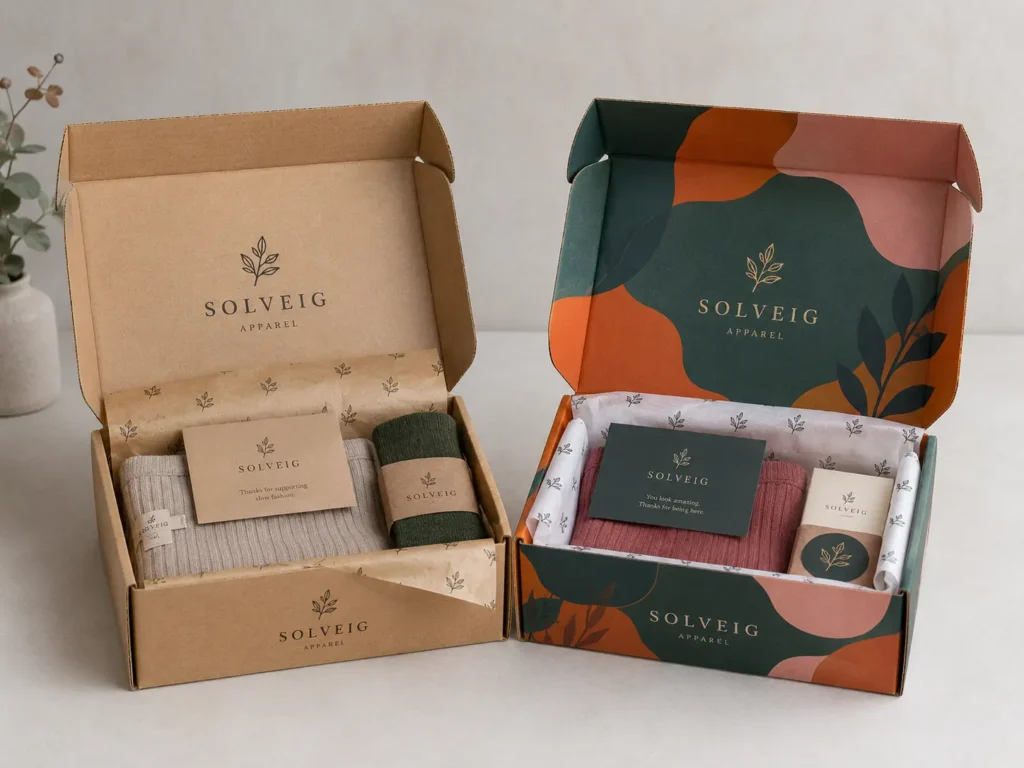
Choose kraft for a natural, simple, or handmade look. Choose white when you need cleaner color printing, detailed graphics, or a more polished brand presentation. The right choice depends on print expectations, product positioning, and budget.
Yes, many custom mailer boxes can be printed inside and outside. Inside printing is useful when the opening experience matters, but it increases print area and cost. For early-stage brands, outside printing plus tissue paper or an insert card may be enough.
As a practical planning range, sampling often takes about 5-10 days, and mass production often takes about 10-25 days after artwork and sample approval. The final timeline depends on quantity, structure, print complexity, finishing, and shipping plan.
Start by reducing unnecessary box volume. Confirm the packed product size, avoid oversized boxes, and consider dimensional weight before production. Also check whether the box can be shipped flat to your warehouse or fulfillment center to save storage and inbound freight space.
Conclusion
Packaging Project Note
If you are preparing a custom mailer box project, Originality Pack can help review your product size, quantity, printing needs, packaging components, and shipping destination before quoting. For projects that include tissue paper, insert cards, stickers, or apparel packaging components, it is better to plan the full packaging system together instead of treating the box as a separate item. You can also start from the Originality Pack homepage to compare the broader custom packaging product range.
Related Blog Reading