
Quick Answer
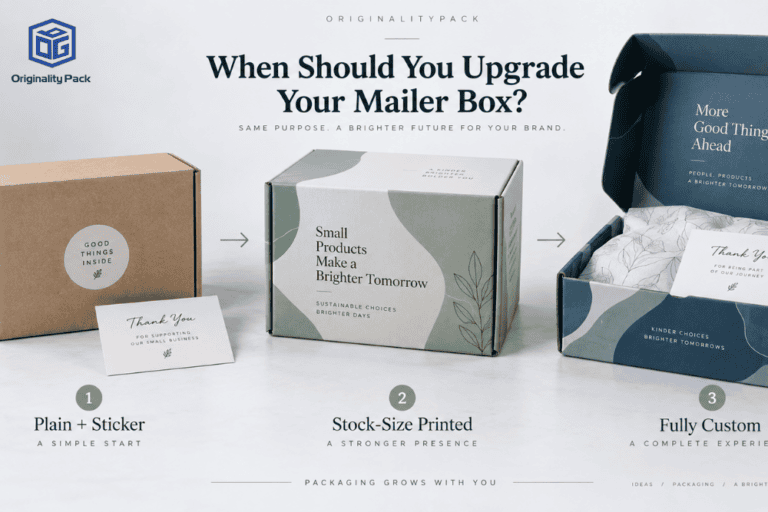
For most small businesses, custom mailer boxes are worth considering only after product dimensions, order volume, and branding are reasonably stable. Start with plain stock boxes and variable branding while testing. Move to stock-size printed mailers when branding stabilizes but sizing is uncertain. Choose fully custom size and print when a verified fit can reduce empty space, packing materials, or fulfillment friction without creating excess inventory.
Table of Contents
Custom packaging can make a shipment feel more intentional, but a printed box is not automatically the right first investment. A small business may still be testing its product range, changing its artwork, or learning which box sizes it actually uses. Ordering too much too early can turn packaging into obsolete inventory rather than a useful brand asset.
Key Takeaways for Small-Business Mailer Boxes
- A low-commitment box is usually safer while products, artwork, or sales volume are still changing.
- Custom printing does not always require a custom box size; using an existing supplier structure can be a practical middle step.
- Compare total cost per shipped order, not only the supplier's box price.
- Approve the packed system—product, insert, tissue, closure, and shipping performance—not an empty box or digital mockup.
Which Mailer Box Stage Fits Your Small Business Now?
The best route depends on how much is already known. A business that is still testing its product should not make the same packaging commitment as a brand with repeat orders, stable artwork, and a proven packout.
| Mailer route | Best fit | Main advantage | Main trade-off | What to verify |
|---|---|---|---|---|
| Plain stock box + sticker, tape, or card | Launches, seasonal products, changing artwork, uncertain demand | Low design and inventory commitment | Manual branding work and limited print coverage | Product protection, sticker application time, and available stock sizes |
| Stock-size printed mailer | Stable branding but uncertain demand or no clear need for a custom die | Printed presentation without developing a new structure | The existing size may still leave unused space | Supplier dieline, MOQ, packed fit, print method, and repeat availability |
| Fully custom size + custom printing | Stable products, repeat volume, known packout, measurable sizing problem | Control over fit, print area, opening sequence, and packing layout | More specification work and greater obsolete-inventory risk | Final dimensions, tooling, sample performance, carton packing, and reorder plan |
Swipe horizontally to view the full table.
Not sure which route fits your business? To compare the three routes, share:
- A product photo and approximate packed dimensions
- Your expected quantity
- A quick note on the packaging you use today
We can help you compare a stock box, stock-size printed mailer, and fully custom mailer before you commit.
When Is a Plain Box with Stickers the Lower-Risk Choice?
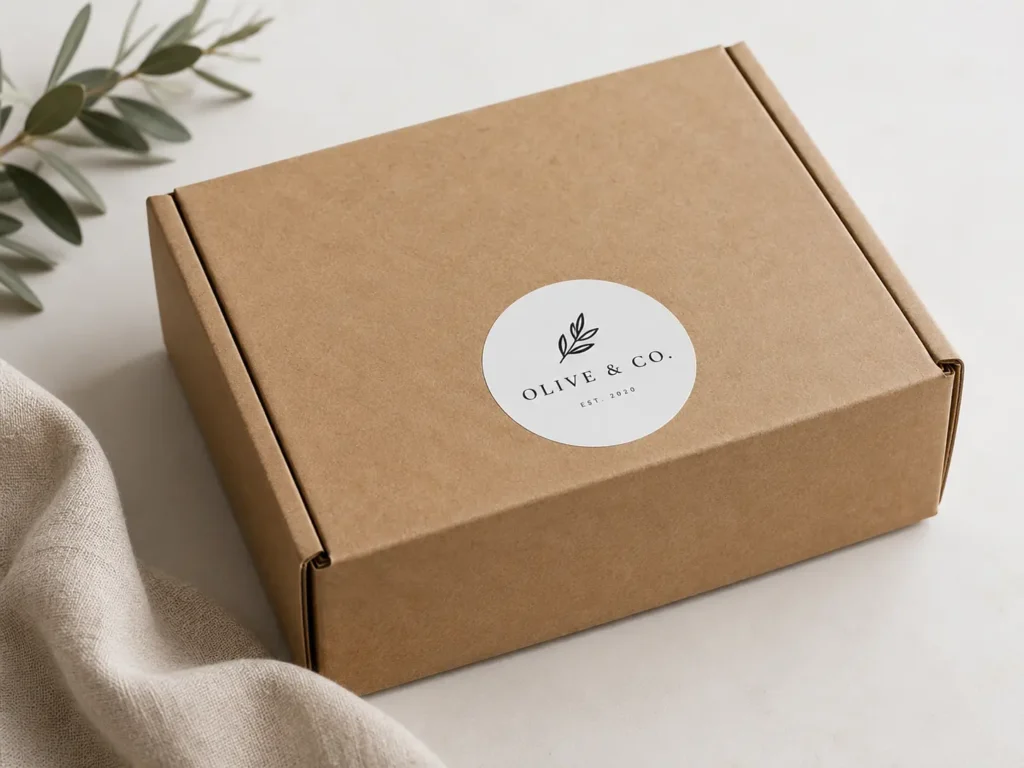
Choose a plain stock box with a sticker, printed tape, tissue, or card when flexibility matters more than full-surface branding. This route is especially practical when a product is new, several box sizes are being tested, or brand artwork may change within the next reorder cycle.
In one ecommerce packaging discussion, a buyer questioned whether custom printing justified the commitment, while participants suggested branded tape or stickers as a bridge. The exchange reflects the real trade-off: flexibility now versus a more integrated presentation later.
One neutral box can serve several products while a custom packaging sticker identifies each collection. This becomes less suitable when employees or a 3PL must apply branding by hand at meaningful volume, or when artwork needs to cover several panels.
What to measure: Time the complete packing process, including folding the box, applying the sticker or tape, adding tissue and cards, inserting the product, and closing the package. A low material price can still create fulfillment friction if every order needs several manual branding steps.
When Is a Stock-Size Printed Mailer the Best Middle Step?
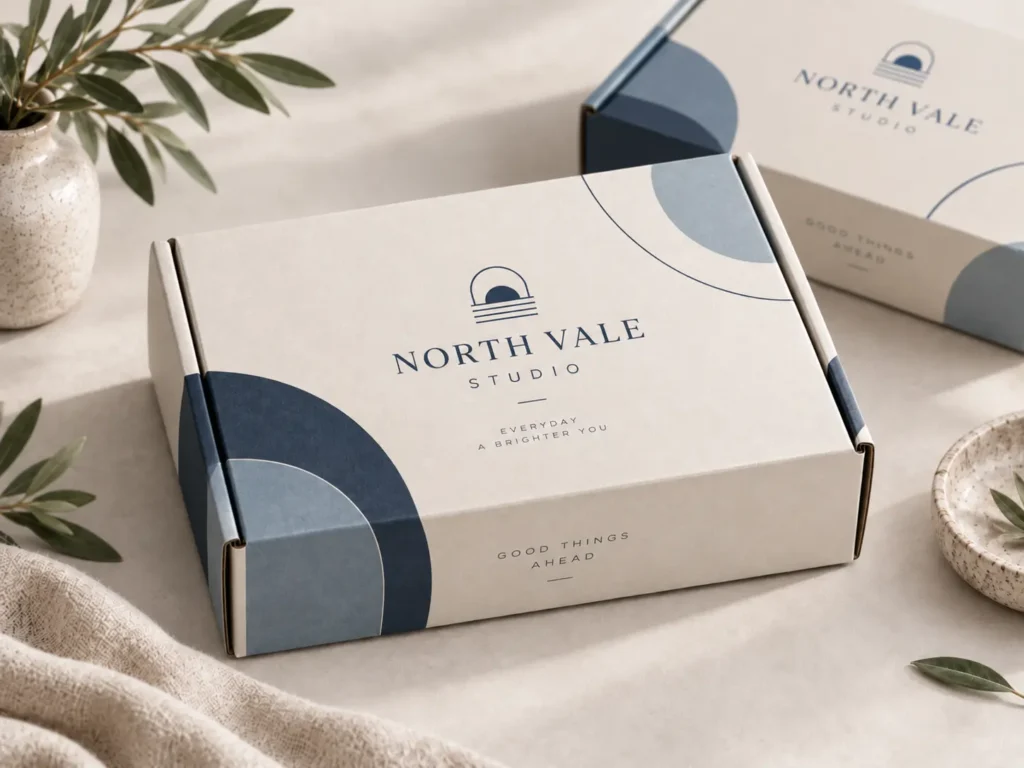
A stock-size printed mailer is often the overlooked middle route. The supplier uses an existing structure or dieline while the brand customizes the artwork. This avoids developing new geometry before the business knows whether custom dimensions will create a meaningful operational benefit.
Choose this route when the logo, colors, and core messaging are stable, but monthly demand or the final product mix is not.
It is not automatically a no-tooling or low-MOQ product. Confirm whether the size uses an existing cutting tool, whether MOQ applies per artwork or size, and whether the structure will remain available for reorders.
Avoid this route when the closest existing size leaves so much empty space that it increases void fill, allows product movement, or changes parcel billing. In that case, the apparent saving from avoiding a custom size may move into fulfillment and shipping instead.
When Is a Fully Custom Mailer Box Worth the Commitment?
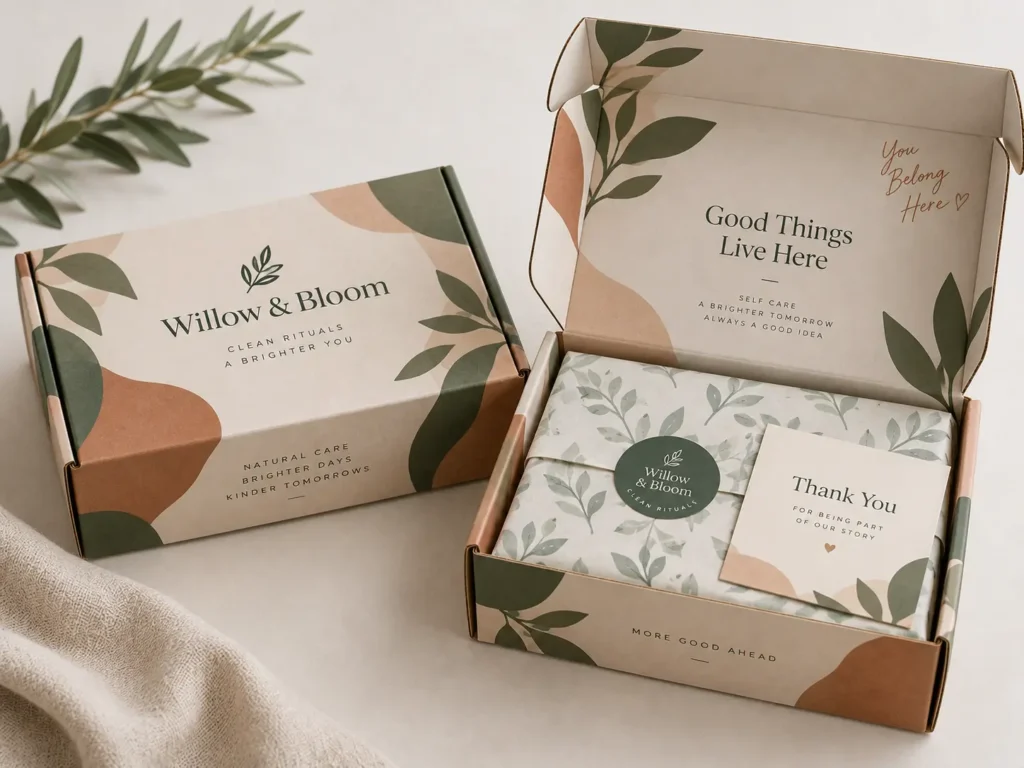
A fully custom mailer becomes easier to justify when product dimensions, packing, sales volume, and artwork are stable. Its size should solve a measurable problem—such as excessive empty space, slow packing, or the need to hold an insert—not merely make the quote feel more bespoke.
Custom sizing may reduce unused volume, but the smallest box is not always the safest. Use our custom mailer box sizing guide to compare packed-product clearance, internal dimensions, and finished external dimensions before locking the dieline. For fragile or multi-item orders, review the outer mailer and mailer box insert as one system.
UPS explains that dimensional weight represents the space a package occupies relative to its actual weight and calculates it from length, width, and height divided by an applicable divisor. Right-sizing can therefore affect shipping cost, but only when the finished external dimensions change the billing outcome. Check the current UPS dimensional-weight guidance for the applicable service and rate type.
Avoid committing to a fully custom structure if a product redesign, regulatory artwork change, new fulfillment partner, or uncertain bundle configuration could make the inventory unusable. A lower unit cost at a larger quantity does not recover the value of boxes that no longer fit.
How Should You Calculate the True Cost per Shipped Order?
Compare every option using the same product, time period, order volume, packing process, and delivery assumptions. The supplier’s box price is only one part of the decision.
What does packaging actually cost per shipped order?
+ Setup allocation
+ Storage
+ Void fill
+ Parcel-size impact
+ 3PL handling
+ Obsolete stock
- Production: Include the box, printing, tooling or setup, inserts, and other required components.
- Inbound logistics: Confirm carton quantity, carton dimensions, delivery method, duties, and which party is responsible under the quoted shipping terms.
- Fulfillment: Measure assembly, sticker application, tissue folding, insert loading, and closure rather than estimating from an empty sample.
- Storage and 3PL: Ask how packaging is received, stored, picked, assembled, and charged. Flat-packed boxes still occupy warehouse space.
- Risk: Account for artwork changes, damaged stock, inaccurate demand forecasts, and packaging that becomes incompatible with the product.
For quantity planning, calculate expected use before accepting the largest price break. The custom packaging order quantity calculator separates demand-based requirements, safety stock, lead time, usable inventory, and supplier MOQ so a lower unit price does not automatically become a recommendation to overbuy.
Want to compare the real cost of your current box with a custom mailer? Send:
- The external size of your current box and its packed weight
- Your expected quantity and delivery destination
- Any known 3PL or storage charges
We can help identify which production, packing, freight, and storage variables should be compared before requesting a project-specific quote.
What Should You Verify Before Upgrading Your Mailer Box?
Validate the complete packaging system before increasing customization or quantity. A digital rendering can confirm artwork direction, but it cannot prove fit, board behavior, assembly time, closure, or performance after handling.
Validate the Packaging With a Real Packed Sample
Check the complete packing process before committing to a longer production run.
ISTA describes its 3L protocol as an ecommerce fulfillment test that simulates supply-chain hazards including vibration, shock, compression, temperature, and humidity. A small business does not necessarily need that exact protocol for every product, but the principle matters: evaluate the packed product against the hazards of its actual route. Use the custom packaging sample approval checklist to record what the sample represents and what still requires confirmation.
What Can OriginalityPack Check Before You Commit?
OriginalityPack’s current custom corrugated mailer box page lists a starting MOQ of 100 pieces, physical sampling in approximately 5–7 days, and production in approximately 10–20 days. These are planning points for OriginalityPack projects, not universal industry promises. Final feasibility and timing depend on size, structure, material, artwork, print coverage, finish, quantity, sample requirements, factory schedule, and delivery plan.
Before quoting, the practical review should compare the packed product dimensions, filled weight, expected order quantity, branding stage, insert or void-fill needs, destination, and current fulfillment problem. The result may be a plain-box branding system, an existing printed structure, or a fully custom mailer. The most customized option is not automatically the most appropriate one.
Can You Send the Product to Our Factory for Box and Insert Fitting?
Yes. A customer can send a finished product sample to the OriginalityPack factory before the mailer dimensions and insert are finalized. If the product is being manufactured in China, the customer’s Chinese supplier can send one representative unit directly to our factory. Our team can measure the physical item, check whether it fits the proposed mailer and insert, and adjust the box dimensions and insert layout around the actual product.
Use a production-representative unit whenever possible. If the finished products can vary in size, attachments, or assembly, provide the allowed dimension range or more than one unit for checking. Physical fitting confirms packout, clearance, closure, and insert contact; it does not by itself prove transit protection, which still requires a packed-sample test appropriate to the product and shipping route.
FAQ: Custom Mailer Boxes for Small Business
Yes, when products have compatible packed dimensions and protection needs. Test the smallest and largest SKU. A shared box simplifies inventory, but excessive space may increase movement, fill, or parcel volume.
Not automatically. Exterior printing creates the first branded touchpoint; interior printing supports the opening reveal. If MOQ or budget is constrained, prioritize the surface performing the more important job.
No. Some suppliers can print an existing mailer structure or stock dieline. Confirm available sizes, MOQ, printing process, setup, and reorder availability. Choose a custom size only when the fit or fulfillment benefit justifies the additional specification work.
Prepare the packed product dimensions, filled weight, order quantity, preferred box size or size uncertainty, outside and inside print requirements, artwork status, insert or void-fill needs, delivery country and postal code, target timing, and current packaging problem. Ask for comparable quantity tiers using the same specification.
Choose the Lowest-Commitment Route That Solves the Real Problem
Custom mailer boxes for small business are worth considering when they solve a verified fit, fulfillment, presentation, or repeat-order problem. A plain box with flexible branding is often safer during testing. A stock-size printed mailer can bridge the gap once the brand is stable. A fully custom size makes more sense when the product, packout, artwork, and demand are predictable enough to support the commitment.
Start with the simplest route that protects the product and works operationally. Then measure what is still inefficient. If a custom mailer could solve that problem, share the packed product dimensions, weight, quantity, artwork status, and delivery destination for a project-specific structure and MOQ review. If the product is being made in China, your product supplier can also send a representative unit directly to our factory for box and insert fitting.
Sources Used
Tell Us About Your Packaging Project
Share your packaging needs, and our team will recommend the right solution for your project.