

Table of Contents
Quick Answer
A corrugated mailer box is usually the best overall choice for ecommerce shipping because it balances crush protection, presentation, and shipping efficiency. Rigid boxes are better for premium presentation, while poly mailers work best for lightweight, flexible products that do not need structural protection.
The corrugated mailer box vs poly mailer choice depends first on whether the product needs structure. A T-shirt may ship safely in a bag, while a cosmetics set could be crushed. A rigid box can suffer damaged corners without an outer carton.
Which Packaging Type Protects Your Product Best?
Choose a custom mailer box for structure and branded shipping, a rigid box for premium presentation, and a poly mailer for flexible goods that tolerate bending and pressure.
If a rigid box is the better fit, use our rigid box style comparison to choose the opening structure and decide whether formed or collapsible delivery fits the logistics plan.
| Decision Factor | Corrugated Mailer Box | Rigid Box | Poly Mailer |
|---|---|---|---|
| Crush protection | Good when board, flute, and size are correctly specified | Good for product shape, but corners and wrapped surfaces may need an outer shipper | Very low; pressure transfers to the product |
| Moisture protection | Limited without an inner bag or suitable coating | Limited; wrapped paper can mark when wet | Good against normal rain when sealed |
| Internal cushioning | Uses void fill or fitted inserts | Often uses a presentation insert | None unless padded; still lacks crush resistance |
| Best use | Ecommerce kits, cosmetics, gifts, and multi-item orders | Jewelry, cosmetics, gift sets, and retail presentation | Soft, lightweight, non-fragile goods |
| Direct parcel shipping | Yes, when correctly sized and specified | Usually needs a corrugated outer shipper | Yes, for suitable soft goods |
| Presentation | Strong branded ecommerce experience | Highest-value gift presentation | Simple and lightweight |
| Main trade-off | More shipping volume than a bag | Higher cost, storage volume, and possible second box | Lowest structural protection |
Swipe horizontally to view the full table.
Factory recommendation: Compare samples using the final product, pouch, tissue, insert, accessories, and retail box—not an empty package.
Not Sure About Your Packaging Structure?
Share your product size, weight, inserts, and shipping requirements. Our team can help review the right box structure before production to improve product protection and avoid unnecessary packaging costs.
What Is the Structural Difference Between Corrugated, Rigid, and Poly Mailers?
Corrugated Mailer Box
A corrugated mailer box is a die-cut shipping box made from fluted corrugated board designed for parcel delivery. Board grade, flute type, size, and product weight all affect performance. See our corrugated flute guide or compare custom printed mailer box structures.
Rigid Box
A rigid box is a premium presentation box made from thick greyboard wrapped with printed paper. FedEx advises putting chipboard gift or shoe boxes inside a corrugated outer box in its packing guidance.
Poly Mailer
A poly mailer is a flexible plastic shipping bag designed for lightweight, non-fragile products. It saves weight and storage space but transfers external pressure to the product.
When Does a Custom Mailer Box Provide the Best Protection?

Choose corrugated shipping packaging for the best balance of ecommerce protection, presentation, and packing efficiency. It resists bending and stacking better than a poly mailer, but weak board, excess space, or a concentrated load can still cause failure.
Printed mailer boxes suit skincare sets, subscriptions, accessories, apparel, and multi-item gifts. Heavy bottles, glass, ceramics, or concentrated loads need stronger board, an insert, or a different custom paper box structure.
When Is a Rigid Box Worth the Extra Cost—and Does It Need an Outer Shipper?
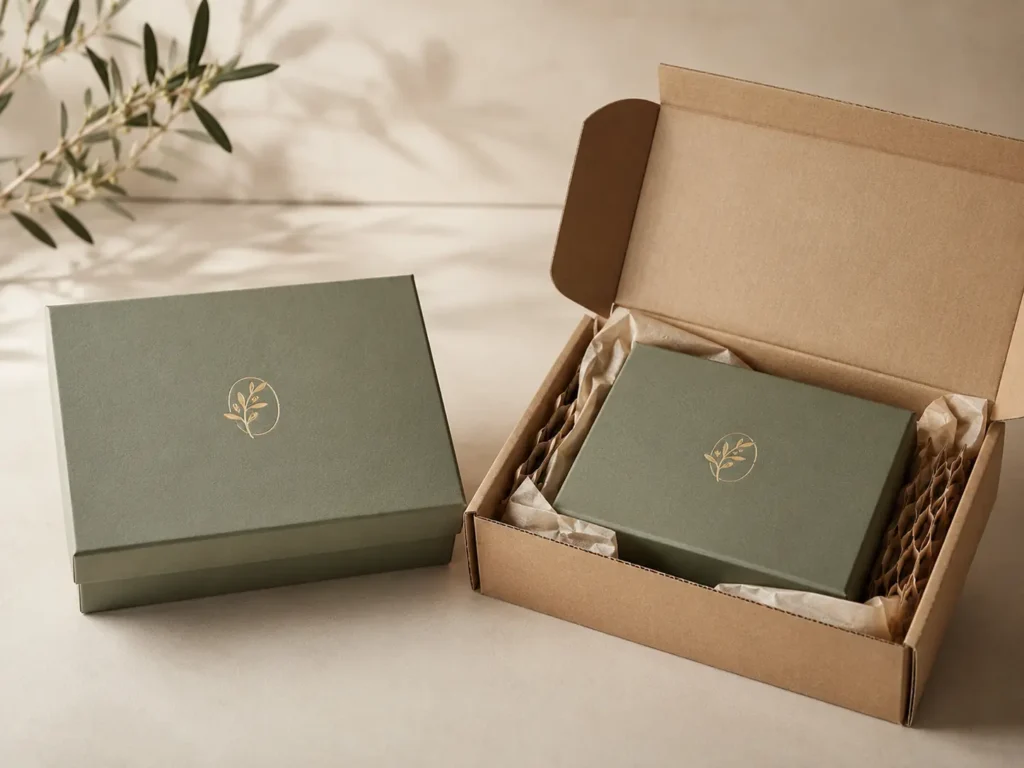
Choose a rigid box for premium presentation, not as the default parcel shipper. It is worth the cost when gifting, display, or long-term storage contributes to the product value.
Rigid boxes suit jewelry, watches, perfume, cosmetics, and gift sets. A fitted insert holds products accurately, but the assembled box occupies more storage and freight volume. A corrugated outer shipper adds cost while protecting corners and surfaces. Review custom rigid luxury boxes, then confirm the shipping layer.
When Is a Poly Mailer Protective Enough?

Choose a poly mailer for soft, non-fragile products when low weight and fast packing matter more than crush protection. It works well for T-shirts, leggings, socks, and similar textiles without sharp corners.
A padded mailer reduces minor impact but does not provide box-like compression resistance. FedEx’s 2025 guide advises against using a polybag for items over 2.5 kg (5 lb), glass, liquids, electronics, or other fragile products; it describes padded mailers as limited cushioning for non-fragile goods. See its polybag and padded-mailer guidance.
Which Package Fits Clothing, Cosmetics, Jewelry, and Gift Products?
Soft apparel can use a poly mailer, dent-sensitive sets need a corrugated shipping box, and high-value gifts may justify a rigid inner box plus a corrugated shipper.
| Product | Practical Starting Point | Recommended Packaging System | Condition That Changes the Choice |
|---|---|---|---|
| Soft apparel | Poly mailer | Garment bag or tissue + poly mailer | Upgrade for gifts, multiple items, or crush-sensitive accessories |
| Skincare set | Corrugated mailer with insert | Inner protection + fitted insert + mailer | Upgrade for glass, heavy jars, or liquids |
| Jewelry or watch | Rigid presentation box with fitted insert | Rigid box + insert + corrugated outer shipper | Add a corrugated outer box for parcel shipping |
| Candle or ceramic item | Tested corrugated box with cushioning | Restraint + cushioning + corrugated shipper | Use double boxing when fragility and route risk justify it |
| Subscription kit | Corrugated mailer with dividers or insert | Custom insert for fixed kits; void fill for changing mixes | Increase strength for concentrated weight or a large span |
Swipe horizontally to view the full table.
Which Packaging Fits Your Brand Stage?
New brands should keep the packaging system simple; growing ecommerce brands benefit from a printed corrugated mailer and insert; premium gift brands need presentation plus a separate shipping layer.
Simple Mailer Box or Poly Mailer
For new brands testing products, start with a practical packaging solution based on product protection needs. Choose a simple mailer box for fragile items or a poly mailer for lightweight products.
Best for product testingWhen Should You Use Void Fill Instead of a Custom Insert?
Use kraft paper or honeycomb void fill when one mailer box must handle many SKUs or changing product combinations. Use a custom insert when the products and bundle are fixed and reordered consistently.
Void fill avoids a separate insert for every SKU, lowering tooling and packaging inventory. The trade-off is more packing labor and less precise presentation. A custom insert costs more but positions repeat sets consistently.
For fragile products, FedEx recommends approximately 5–8 cm of cushioning. Check product movement and closure before choosing fill or an insert. See the FedEx guide and our custom mailer box sizing and protection guide.
If you’re choosing between EVA, EPE, paperboard, corrugated, or molded insert materials, see our mailer box insert guide.
How Do Packaging Cost and Shipping Volume Affect Your Choice?
Poly mailers minimize weight and storage; corrugated mailers add shipping cube for structure; rigid boxes may require a second box. Compare landed cost, not the empty package price.
Right-sizing matters: an oversized branded shipping box can increase dimensional weight and storage, while a cheap poly mailer becomes expensive if dented products must be replaced. Include inserts, packing labor, any outer carton, freight volume, and damage risk in the landed-cost comparison.
What Should You Test Before Approving a Packaging Sample?
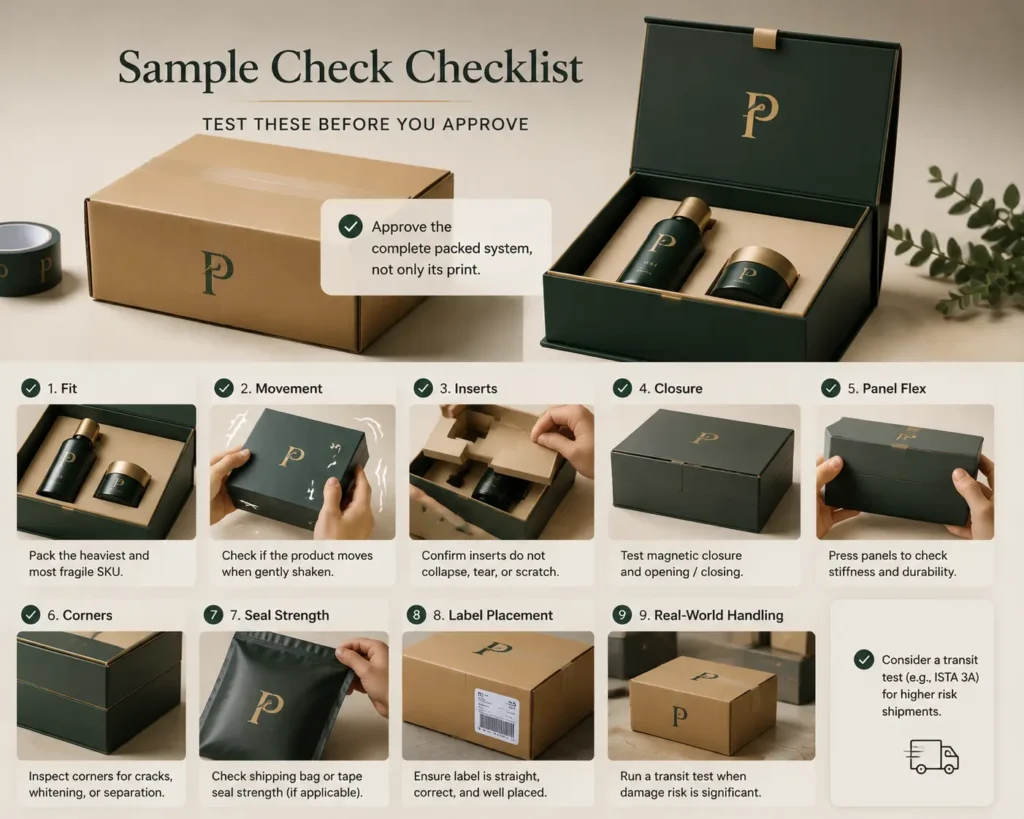
Approve the complete packed system, not only its print. Test fit, movement, closure, panel flex, corners, seal strength, label placement, and condition after realistic handling.
- Pack the heaviest and most fragile SKU planned for that size.
- Check whether the product moves when the closed package is gently shaken.
- Confirm that inserts do not collapse, tear, or scratch the product.
- Run a controlled transit trial or laboratory test when damage risk is significant.
ISTA 3A is a general simulation procedure for individual parcel packages weighing 150 lb (70 kg) or less and addresses hazards including drops and vibration. Confirm the appropriate protocol with a qualified laboratory using current ISTA guidance.
Which Common Packaging Mistakes Increase Damage or Cost?
Using a Presentation Box as a Shipper
A rigid box can maintain its premium shape, but it is not always designed to handle direct shipping stress. Without an outer shipper, corners may crush and paper surfaces can become scratched during transit.
Choosing Packaging Only by Unit Price
The lowest packaging cost does not always mean the lowest total cost. Consider shipping volume, labor, inserts, storage, damage replacement, and any required outer cartons.
Using One Oversized Mailer for Every SKU
A universal box size may look convenient, but excessive empty space creates product movement, requires more filler, and can increase dimensional shipping weight. See our guide to choosing the right mailer box size for how to measure products and set clearance correctly.
Approving an Empty Packaging Sample
Packaging performance changes when the actual product and inserts are added. Always test the final packed version because weight affects the base, walls, and closure strength.
Not Sure Which Packaging Structure Fits Your Product?
Share your product photos, packed size, weight, quantity, and delivery country. Originality Pack can recommend:
- Suitable packaging type and box structure direction
- Insert requirements and shipping protection considerations
- A practical sampling approach
This guidance draws on 25+ years of custom packaging production, direct-factory structure review, coordinated inserts and packaging materials, and shipping-plan support for overseas orders.
Frequently Asked Questions About Mailer Protection
A rigid box feels harder and holds its shape, but a corrugated mailer is normally better suited to parcel handling. Board specification, size, inserts, weight, and testing still decide performance.
A rigid box can ship without another carton only when the complete structure is designed and tested for the shipping route. For most premium gift boxes, a corrugated outer shipper provides safer protection.
A sealed film mailer resists normal rain, but punctures, weak seams, and prolonged exposure can let water in. Avoid an absolute waterproof claim without testing.
They may suit flat, non-fragile accessories, but glass, liquids, heavy jars, and dent-sensitive cartons usually need a box, restraint, and cushioning.
A poly mailer suits lightweight, soft garments. Use a corrugated mailer for structured accessories, multiple items, gifts, or retail boxes that must keep sharp corners.
A corrugated mailer normally costs less to produce, store, and freight because it can ship flat. A rigid box costs more and may need a corrugated outer shipper, but it provides stronger gift presentation.
A poly mailer usually has the lowest material weight and shipping volume. A box costs more but can prevent crushing, so compare packaging cost with damage and replacement risk.
Choose Based on Your Priority
Poly Mailer
Best for lightweight products where reducing shipping weight is the main priority. Common for apparel and soft goods.
Final Recommendation: Match Protection to the Product Risk
For ecommerce products that need structure, start with a right-sized corrugated mailer and suitable restraint. Use a rigid box when presentation justifies the cost, adding an outer shipper when needed. Use a poly mailer only when the product tolerates bending, compression, and limited impact protection.
Base the final decision on the packed product. Confirm it with a physical sample when damage would be costly.
Still Deciding Between Corrugated, Rigid, or Poly Mailer?
Every product, order volume, and shipping route is different—the right packaging system usually comes down to your specific SKU, not a general rule. Share your details and we'll help you confirm:
- Whether corrugated, rigid, or poly mailer fits your product best
- The right board grade, flute type, or film thickness for your route
- Insert or void-fill needs based on your order volume