
Quick Answer
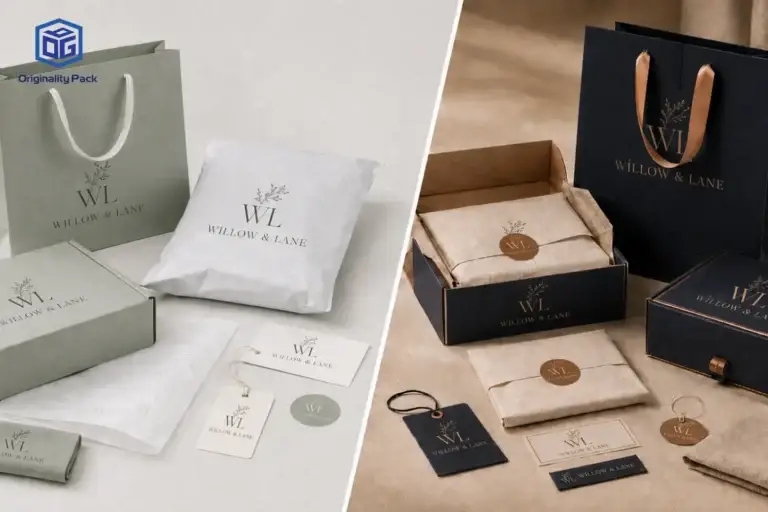
Noissue can be a practical choice for clothing brands that need low minimums, standard packaging items, and a simple online ordering process. A direct factory is usually better when a brand needs apparel-specific packaging, custom sizing, coordinated colors, better unit pricing at scale, and hands-on production guidance for bags, boxes, hang tags, woven labels, care labels, and other clothing packaging components.
Table of Contents
The Real Question Is Not “Which Supplier Is Better?”
Noissue is useful when a brand wants an easy way to order standard custom packaging in smaller quantities. Its own help center explains that low minimums are designed for small businesses, startups, seasonal runs, and limited promotional needs.
A direct factory works differently. It is usually the better fit when packaging becomes part of a full apparel system retail paper bags, shipping boxes, tissue paper, thank you cards, stickers, hang tags, woven labels, care labels, and repeat production that needs consistent quality over time.
From a factory production perspective, the decision looks different than it does from a buyer’s side — and the gap between the two is where most clothing brands lose time and money.
So this comparison is not about saying one option is always right. It is about helping clothing brands avoid choosing a supplier based only on the lowest MOQ or the easiest ordering page.
When Noissue Makes Sense for a Clothing Brand
- You need a low starting quantity.
- You want to test one or two packaging items before committing to a larger system.
- Your design is simple and fits standard product options.
- You do not need custom structure, special finishing, or exact matching across multiple materials.
When a Direct Factory Makes More Sense
- Will the garment be sold in store, shipped online, or both?
- Does the bag need reinforced handles for heavier apparel?
- Should the box protect folded garments from compression?
- Do the hang tags, woven labels, care labels, stickers, and paper bags need a coordinated brand color?
- Is the brand planning one test order or repeated seasonal production?
For growing clothing brands, a clothing-focused factory can help coordinate paper bags, boxes, hang tags, woven labels, care labels, stickers, tissue paper, and printed cards within one production plan. For apparel sellers, this reduces the need to manage several separate suppliers for items that should visually and operationally work together.
Clothing Brands Need More Than Generic Packaging Items
A clothing brand may need a retail paper bag for boutique purchases, a mailer box for ecommerce orders, tissue paper to reduce friction inside the box, stickers for sealing, hang tags for product information, woven labels for garment identity, and care labels for washing instructions. These are not isolated items. They affect how the customer sees the brand from the moment the package arrives to the moment the garment is worn.
Our retail-versus-ecommerce packaging explains when a clothing brand needs a paper bag, a mailer box, or both.
For brands building a more complete apparel packaging setup, our custom clothing packaging page shows how paper bags, boxes, tissue paper, stickers, hang tags, woven labels, care labels, and printed cards can work together.
- The black on the paper bag may look warmer than the black on the hang tag.
- The logo may print sharply on coated paper but softer on kraft paper.
- The tissue paper may feel too thin for heavier garments.
- The woven label may use thread colors that do not match printed packaging exactly.
- The care label may be ready on time, while paper bags are delayed because of finishing.
Noissue vs Direct Factory: Which Supplier Fits Your Clothing Brand?
| Decision Factor | Noissue May Fit When... | Direct Factory May Fit When... | Trade-Off to Consider |
|---|---|---|---|
| Order Quantity | You need low minimums for testing, seasonal drops, or limited runs. | You are preparing repeat orders or larger production quantities. | Low MOQ helps cash flow, but unit cost is often higher because setup costs are spread across fewer pieces. |
| Customization Depth | Your design fits standard sizes, materials, and print options. | You need custom sizes, structures, handles, finishes, or coordinated packaging components. | Factory production gives more flexibility, but it requires clearer artwork and specifications. |
| Apparel-Specific Items | You only need standard bags, tissue, stickers, or boxes. | You need paper bags, boxes, hang tags, woven labels, care labels, stickers, and other apparel packaging parts. | A clothing-focused factory can reduce supplier fragmentation, but the quote process is more detailed. |
| Color Control | Exact matching across multiple packaging materials is not critical. | You need better color coordination across paper, labels, tags, and accessories. | No supplier can promise zero color difference, but one factory can manage physical sample matching more consistently. |
| Production Guidance | You already know the exact product and options you want. | You need advice on GSM, finishing, sampling, structure, or shipping protection. | Direct factory communication takes more time upfront, but it can prevent costly production mistakes. |
OriginalityPack specializes in coordinated clothing packaging sets — paper bags, boxes, hang tags, woven labels, care labels, stickers, and tissue paper — with a single production contact, physical sample confirmation, and repeat-order consistency.
The MOQ Trade-Off: Low Minimums Are Useful, But Not Always Cheaper
- Use low MOQ when you are testing designs, launching a capsule collection, or validating demand.
- Move closer to factory-direct production when you have repeat orders, clearer packaging specs, or several packaging items to coordinate.
If MOQ is your main concern, this guide on paper bag MOQ explains why minimum quantities exist and how they affect unit cost.
Customization Depth: Standard Catalog vs Factory-Built Packaging
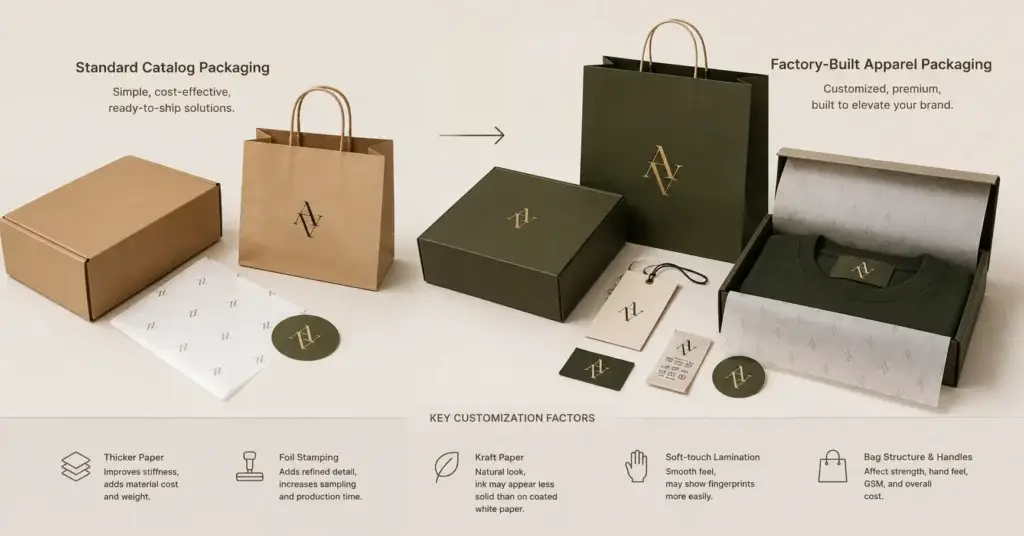
- Thicker paper improves stiffness, but increases material cost and shipping weight.
- Foil stamping adds a refined detail, but increases sampling and production time.
- Kraft paper gives a natural look, but white ink may not appear as solid as it does on coated white paper.
- Soft-touch lamination feels smooth, but it can show fingerprints more easily.
Special finishes such as foil stamping, embossing, spot UV, or soft-touch lamination can improve the final look, but they may also affect sampling and production time. For a clearer breakdown, see our guide on custom packaging production timelines.
Color Consistency Is Easier to Control When One Factory Manages the Full Packaging Set
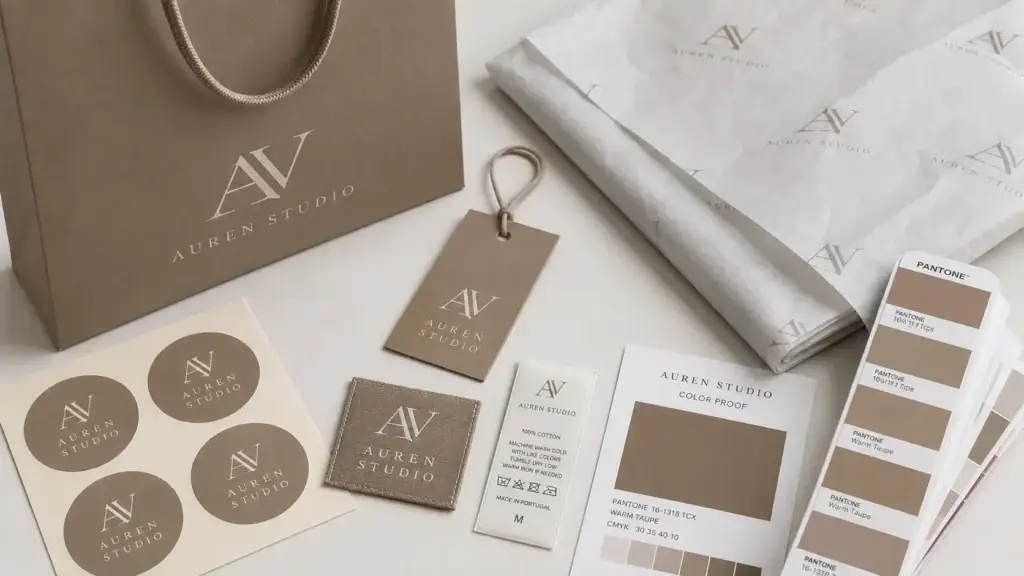
Color is one of the most underestimated issues in clothing packaging.
When a reliable factory manages the full packaging set, it can reduce color difference as much as possible through physical sample matching, material confirmation, pre-production checks, and clearer communication before bulk production. It is still not realistic to promise 100% identical color across every material, but one coordinated production process gives the brand a better chance of keeping the visual system consistent.
Color control also becomes important during repeat orders. Even with the same artwork, packaging colors can shift slightly between batches because of paper, ink, lamination, machine settings, and production conditions. For a deeper explanation, see our guide on why packaging color changes between orders and how to fix it.
Suitable / Not Suitable: Which Supplier Type Fits Your Brand Stage?
Which Option Fits Your Packaging Project?
Select one option below to see when it may or may not fit your clothing packaging needs.
Noissue may be suitable for:
- Small brands testing packaging for the first time.
- Seasonal or promotional runs.
- Standard tissue paper, stickers, mailers, or boxes.
- Brands that value simple online ordering over deep production control.
Noissue may not be suitable for:
- Complex clothing packaging systems with multiple matched components.
- Brands that need custom structures beyond standard catalog options.
- Projects where color consistency across paper bags, labels, tags, and boxes is important.
- Buyers who need factory guidance on materials, sampling, finishing, and repeat production.
A direct factory may be suitable for:
- Growing clothing brands with repeat packaging needs.
- Retail and ecommerce brands building a full packaging system.
- Brands needing paper bags, paper boxes, hang tags, woven labels, care labels, stickers, tissue, and cards in one coordinated process.
- Buyers who want advice on cost, MOQ, material, color, and lead time before production.
A direct factory may not be suitable for:
- One-off orders with extremely small quantities.
- Brands that need only a simple standard item with no customization discussion.
- Buyers who do not yet have artwork, quantity, size, or product-use details ready.
Common Mistakes Clothing Brands Make When Choosing a Packaging Supplier
- Comparing only unit price. A lower unit price may not include shipping volume, sample cost, color risk, or coordination time.
- Choosing low MOQ without thinking about repeat orders. Low MOQ is useful for testing, but repeated small orders can become expensive.
- Ordering retail bags for ecommerce shipping. A paper bag alone usually does not protect clothing during courier delivery.
- Ignoring color differences between materials. A logo can look different on tissue, coated paper, kraft paper, woven labels, and stickers.
- Separating too many suppliers. Managing bags, boxes, hang tags, labels, and stickers separately can create delays and inconsistent results.
- Skipping sample confirmation. A digital proof is useful for layout, but a physical or production sample gives a better sense of material, color, and finish.
How to Choose: A Practical Supplier Checklist
What to Prepare Before Requesting a Quote
Check the details you already have. The more information you prepare, the easier it is for a supplier to recommend the right material, structure, finish, MOQ, and production timeline.
Have most of these details ready? Share your project requirements and get practical production guidance before sampling or bulk production.
Get a QuoteAt this point in the decision process, it becomes useful to speak with a clothing-focused packaging factory rather than only comparing product pages. OriginalityPack’s custom clothing packaging capabilities cover apparel packaging components such as paper bags, boxes, hang tags, woven labels, care labels, stickers, tissue paper, and printed cards, so a buyer can discuss the full packaging system in one place.
Frequently Asked Questions
Noissue can be useful for small clothing brands that need low minimums, standard packaging items, and a simple online ordering process. It is especially practical for testing tissue paper, stickers, mailers, or boxes before committing to larger packaging runs.
A direct factory is not always cheaper for very small orders. However, for larger quantities or repeated orders, factory-direct production can often improve unit cost because setup work is spread across more pieces. The real comparison should include quantity, shipping, sampling, customization, and reorder plans.
A clothing brand should consider switching when it needs custom sizing, stronger material control, apparel-specific items, coordinated packaging sets, better color consistency, or repeat production. If packaging becomes part of your brand system rather than a single printed item, factory support becomes more valuable.
Some factories can support lower MOQs for certain products, but the unit price may be higher. The practical question is not only whether low MOQ is possible, but whether the material, print method, finishing, and setup cost make sense for the buyer’s budget.
Prepare your packaging type, size, quantity, artwork, material preference, finish requirements, sales channel, delivery country, and target timeline. For clothing brands, also list related items such as hang tags, woven labels, care labels, stickers, and tissue paper if they need to match the main packaging.
Final Recommendation: Start Simple, Then Move Closer to the Factory as Complexity Grows
- Use a low-minimum platform when you are testing and need speed.
- Use a direct factory when you need production guidance, apparel-specific packaging, color control, and coordinated items.
Planning a Clothing Packaging Project?
If you are comparing packaging supplier options, Originality Pack can help review your packaging type, quantity, material, finish, color expectations, and timeline before quoting. That makes the supplier decision easier before you commit to production.