
Quick Answer
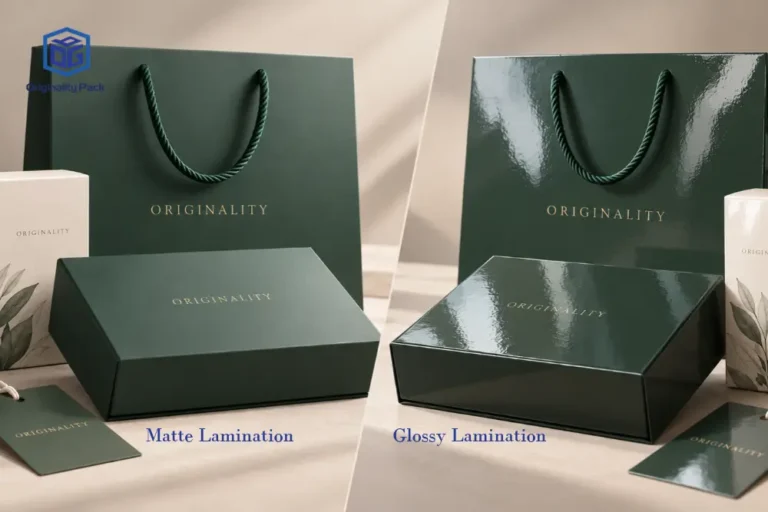
Matte lamination reduces glare and creates a subdued appearance, while gloss gives printed packaging a brighter, more reflective finish. For dark packaging that will be handled frequently, compare anti-scuff matte with standard matte. If reducing plastic film is a priority, consider an unlaminated option.
Choosing a finish for paper bags or boxes means balancing the intended appearance with handling at the counter, during packing, and in customers’ hands. Start with the result you want the packaging to deliver.
Matte vs Gloss Lamination: Which Fits Your Artwork and Retail Use?
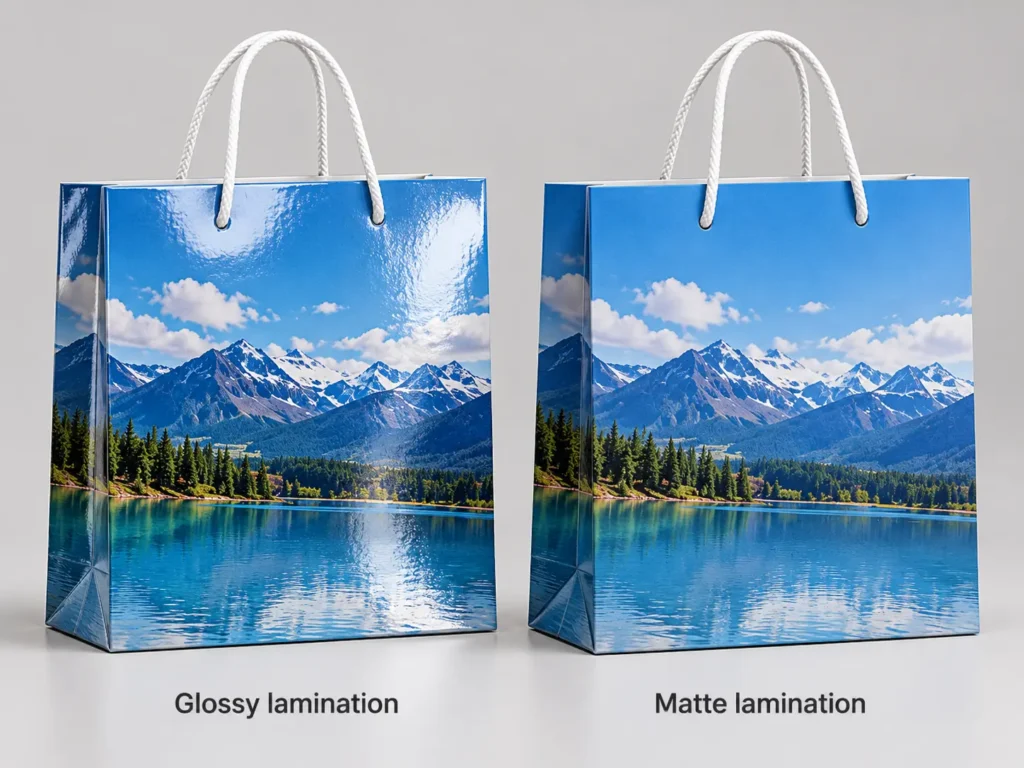
Matte and gloss describe appearance. Performance requirements need separate confirmation. Film lamination bonds a film over the printed surface. Matte produces a lower-sheen result; gloss creates more pronounced reflections. Neither finish automatically suits every product in a particular industry.
Film manufacturers offer different grades within these categories. For example, Cosmo Films lists a matte BOPP film for paper and carton lamination and gloss films for printed paper and paperboard. These are material references, not a specification of the film used in your order.
| Your priority | Recommended starting point | Why it fits | Trade-off |
|---|---|---|---|
| Low glare and restrained presentation | Matte lamination | A lower-sheen surface with less distracting reflection. | Printed colors usually look slightly darker and more subdued. |
| Bright graphics, photographs, and reflective shine | Gloss lamination | Printed colors look brighter, with a shiny surface. | Reflections may compete with small details under strong lighting. |
| Frequently handled white-card bags printed solid black, with a matte look | Anti-scuff matte | A stronger starting point for reducing visible rubbing marks than ordinary matte film. | An upgraded film specification; it is not scratch-proof. |
| A velvety feel on gift packaging | Soft-touch film | A distinct tactile surface. | Some standard soft-touch films can show noticeable fingerprints, especially on dark printed surfaces. Anti-fingerprint grades are available. |
| Reducing added plastic film | An unlaminated construction | Avoids adding a decorative plastic film layer. | The exposed surface must still suit handling; assess the complete package and destination recycling system. |
| Keeping specialty-paper texture exposed | An unlaminated finish | Retains the paper surface selected for the design. | Printing and product contact must suit the exposed paper. |
Swipe horizontally to view the full table.
For custom luxury paper bags, start with carrying and customer handoff; for custom paper boxes, include display lighting and opening. Anti-scuff and soft-touch describe additional film properties, so they belong within the material specification after you choose the intended appearance.
Not sure where your design fits? Tell us the surface effect and handling conditions that matter most. Get a Finish Recommendation.
Do You Need Standard Matte, Anti-Scuff Matte, or Soft-Touch Film?
Choose the surface appearance first, then specify the other properties you need. Low sheen, resistance to rubbing, and a velvety touch are different requirements; a film may combine them, but the word “matte” does not confirm all three.
Standard matte: confirm the appearance and handling
Standard matte can be a starting point when the goal is a subdued surface. Do not assume it includes enhanced scuff resistance or an anti-fingerprint treatment. Derprosa identifies anti-scratch, anti-fingerprint, tactile, and high-gloss properties separately in its film portfolio. Ask which properties the proposed grade actually offers.
Anti-scuff matte: a stronger starting point for printed-black bags
Consider an anti-scuff grade when ordinary contact during packing, transport, or use could leave unacceptable visible marks. Cosmo Films describes scuff-resistant matte films for such handling and lists shopping bags and gift boxes among their applications. This supports considering the film category; it does not make a finished package scratch-proof.
In OriginalityPack’s production experience with white card printed solid black, scuffs on ordinary matte film are particularly noticeable. For that route, we recommend anti-scuff matte as the starting point when a matte appearance is required. Our black cardstock vs printed black paper bag guide explains the material decision separately.
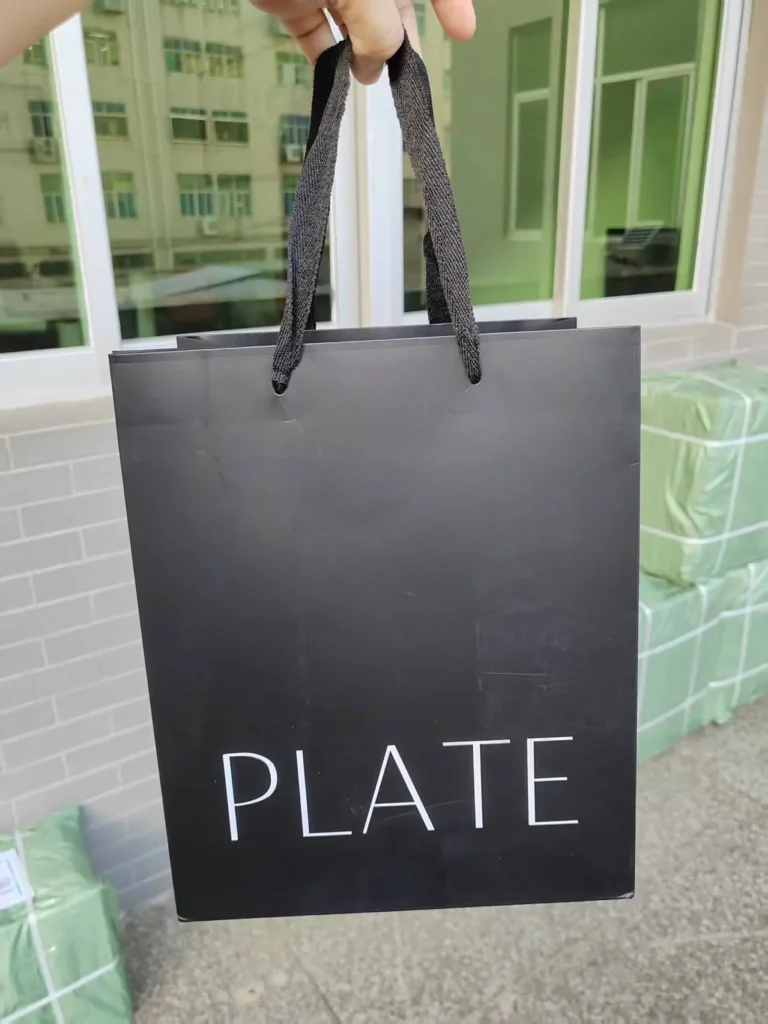
Working with a dark printed design? Share the artwork and the surface-marking problem you want to avoid. Check My Artwork & Finish.
Soft-touch: choose it for a tactile requirement
Soft-touch or velvet film suits a design that specifically needs a velvety feel. Cosmo’s velvet lamination range illustrates this tactile category. Some standard soft-touch films can show noticeable fingerprints, especially on dark printed surfaces. Anti-fingerprint grades are available.
For example, Derprosa’s DL Soft Touch Pro-Shield 4×4 is designed to combine a soft-touch effect with fingerprint and scuff resistance. Choose the grade for the required feel and handling performance; the term “soft-touch” alone does not establish either its fingerprint resistance or its suitability for your package.
Does Matte or Gloss Lamination Cost More?
There is no reliable price ranking from sheen alone. Film grade, laminated area, processing requirements, and quantity affect the quotation. For a useful comparison, keep the paper, artwork, dimensions, and quantity the same, then request the finish alternatives.
If low glare is the only goal, start with a standard-matte specification. If a printed-black surface also needs better resistance to rubbing, ask for the anti-scuff option alongside it. A tactile upgrade is worth considering when the hand feel adds value to the design, with its fingerprint behavior included in the decision.
Will Lamination Change Your Brand Color, Foil, or Spot UV?
In our packaging work, matte lamination usually makes printed colors look a little darker and more subdued; gloss makes them appear brighter. Set color expectations from the finished surface, because an unlaminated printed sheet does not show this change.
If you are comparing two finishes, use the same artwork and paper so you can judge what the film changes. Review important brand colors under consistent lighting, then look at the package in its intended display setting. A bag and box made from different materials may still look different even when both are described as matte. Our guide to packaging color consistency and batch variation covers that wider issue.
For a foil logo, check coverage, adhesion, fine detail, and alignment on the proposed surface. For spot UV, check adhesion, edge definition, and whether the selective gloss contrast is visible at normal viewing angles. Cosmo lists hot foil stamping and UV coating as compatible with specified anti-scuff matte grades, but this does not establish compatibility for every film, foil, or coating combination.
Ask the supplier to confirm the material combination and production sequence before sampling. If the sample omits a finish or simulates it digitally, record what still needs approval on a physical reference.
Image needed: real matte-laminated samples showing foil and spot UV under the same light.
When Should You Consider Unlaminated Packaging to Reduce Plastic Film?
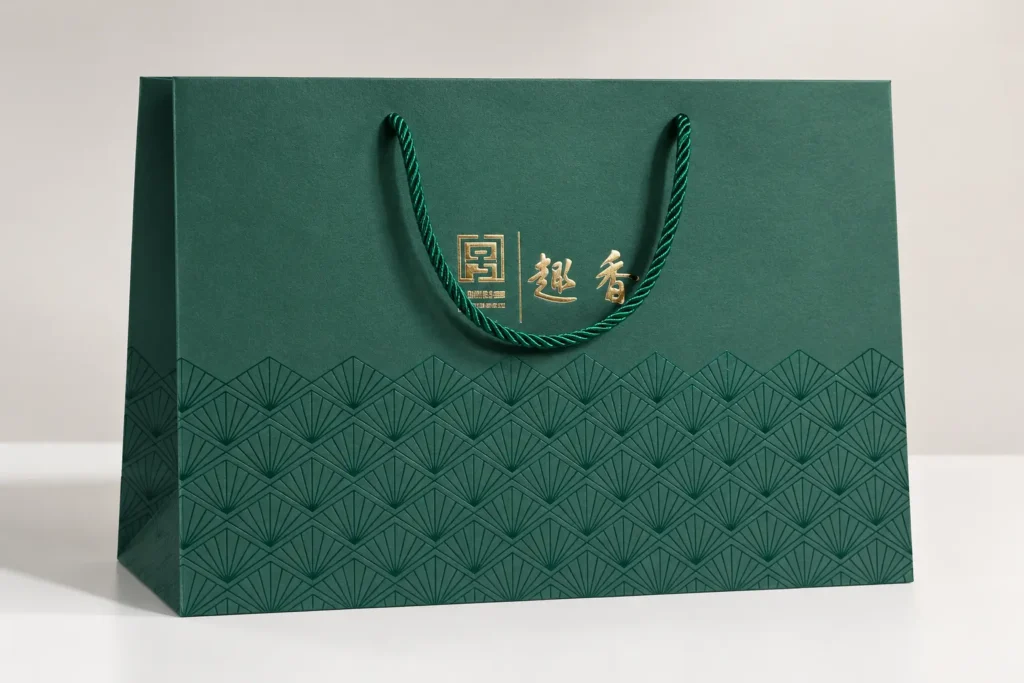
If reducing added plastic film is part of the brief, an unlaminated construction is a useful starting point for paper bags and boxes. It removes the decorative film layer; the overall environmental impact still depends on the complete package and its use.
Cepi’s paper-packaging recyclability guidelines recommend limiting non-paper constituents to what the package needs to function. They also explain that separation and the recycling system matter when paper is combined with other materials. This supports reducing unnecessary film, without treating every laminated package as unrecyclable.
Design the whole package around the environmental goal: paper, inks, adhesives, handles, windows, and other components all need consideration. “No film lamination” does not by itself establish that a finished package is plastic-free, compostable, or accepted in every paper recycling stream.
An unlaminated option also suits specialty paper selected for its exposed texture. The trade-off is that the paper and print remain exposed to handling. If extra protection is genuinely needed, discuss the minimum treatment that meets the use requirement and its suitability for the destination market.
What Should You Check on a Finished Sample?
Use a finished sample to answer the remaining questions about your selected combination. A film swatch helps compare surface options; an assembled bag or box shows how that finish works with folds, edges, and the final construction.
- Control the comparison. Keep the paper, artwork, print method, and lighting as consistent as practical. Note any differences between samples so you do not attribute a paper or printing change to the film.
- Observe normal handling. Examine the sample before and after the contact it will reasonably encounter during packing and use. Look for visible rubbing marks, fingerprints, and changes in appearance. Agree on what is acceptable; an informal comparison is not a standardized abrasion test.
- Inspect the finished construction. On bags, examine the top fold, gussets, and areas that touch adjacent bags. On cartons, check creases, closures, and edges; on wrapped rigid boxes, check corners and wrapped edges. Look for lifting film, bubbles, peeling, or other visible defects.
- Record the approval scope. Identify the actual paper, film grade, artwork version, and finishes represented. Keep an approved reference and list anything still approximate or absent.
A digital mockup can communicate layout, but it cannot establish physical hand feel or surface behavior. If a full production-method sample adds more setup than the order warrants, discuss a suitable combination of finish swatches and physical samples, with the limits written down. Use the custom packaging sample approval checklist when you need the complete approval record.
What Finish Details Should You Put in Your Quote Request?
A useful request translates the desired look into a specification the supplier can review. Include
- Package and paper: bag or box type, dimensions, proposed material, and quantity.
- Artwork: the design file or current draft, important colors, and large dark printed areas.
- Surface requirements: matte, gloss, or no film lamination; any anti-scuff, anti-fingerprint, or soft-touch requirement; and the environmental goal where relevant.
- Other finishes: foil, embossing, or spot UV areas that must work with the film.
- Approval needs: the reference sample or sample method required to resolve the remaining questions.
For repeat orders, reference the approved film grade or unlaminated construction, paper, artwork version, and physical sample. Ask the supplier to flag proposed substitutions before production so the reorder is based on a known finish specification.
Ready to turn your finish choice into a packaging specification?
- Send the package type, dimensions, quantity, and current artwork to OriginalityPack.
Include the selected finish or environmental requirement so the team can review the material and processing details for a quotation.
Choose the Finish You Can Specify and Approve
Choose the finish your design and use require. When plastic reduction comes first, decide whether lamination belongs in the specification at all.
Tell Us About Your Packaging Project
Share your packaging needs, and our team will recommend the right solution for your project.