
Quick Answer
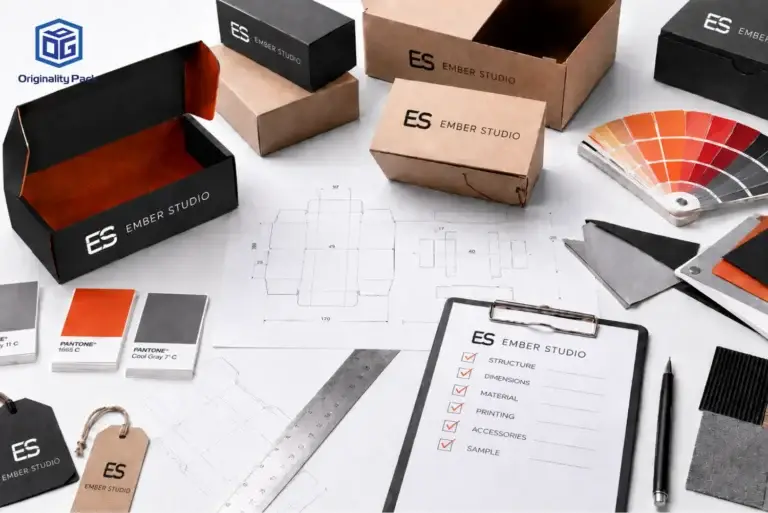
To order custom packaging from China safely, do not start with the lowest price. Start by confirming the supplier's product experience, MOQ, material specs, artwork requirements, sample process, color tolerance, Incoterms, payment terms, and pre-shipment quality checks. A reliable China packaging factory should help clarify risks before production, not only send a quick quote.
Table of Contents
The Risk Is Usually Not "China" — It Is Unclear Specs
Ordering custom packaging from China can be efficient, flexible, and cost-effective when the buying process is clear. Many problems happen not because the supplier is located in China, but because the buyer and supplier never fully define what is being produced, how it will be checked, and who is responsible for shipping or import details.
Factory Benchmarks Buyers Can Use
For custom paper packaging, based on Originality Pack's production records, a practical planning range is usually 5-10 days for sampling, 10-25 days for mass production, and longer when the order includes foil stamping, embossing, spot UV, complex structures, or international sea freight. These are not universal promises, but they are useful benchmarks for comparing quotes and timelines.
For MOQ, the key benchmark is that very small quantities usually carry a higher unit price because printing setup, material preparation, die cutting, and finishing setup are spread across fewer pieces. This is why a paper bag order at 300 pieces and one at 3,000 pieces can have very different unit economics. For a deeper explanation, see our guide to paper bag MOQ.
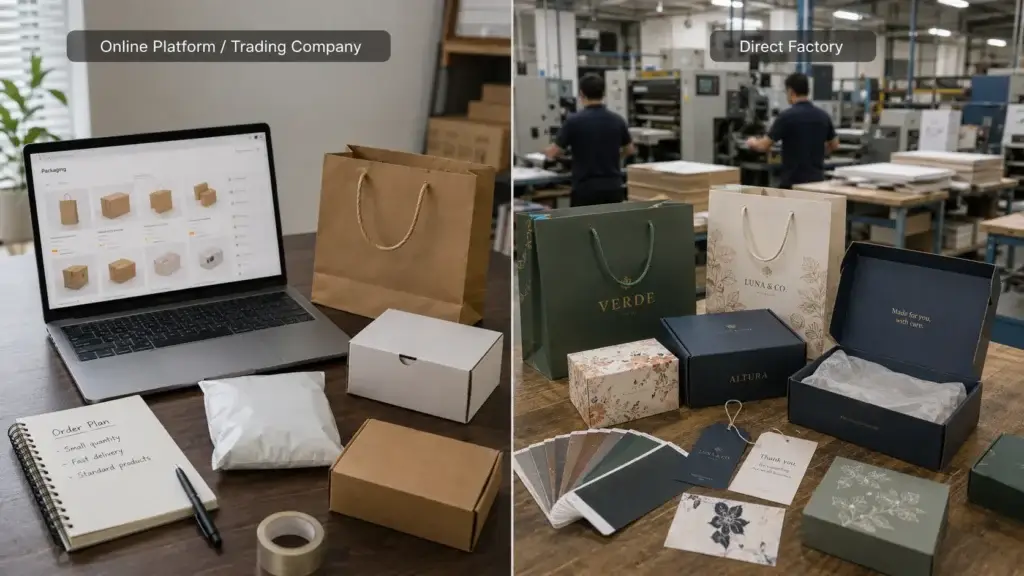
First Decide What Kind of Packaging Supplier You Actually Need
Do Not Ask for a Quote Until You Know These Specs
If you send a supplier only a product name like “custom paper bag” or “mailer box,” the quote will not be very useful. Different suppliers may assume different paper weights, sizes, printing methods, finishes, handles, and packing methods. For a mailer project, use our custom mailer box sizing guide to prepare packed-product measurements, internal dimensions, clearance, and shipping-size information before requesting a quote. Before sending the same brief to different suppliers, decide whether a China-based or local paper bag supplier is better suited to your quantity, timeline, and delivery needs.
Before Requesting a Quote, Prepare These Details
Use this checklist to make your packaging inquiry clearer before contacting a China packaging supplier.
Custom Packaging from China: What to Confirm Before You Pay
Before paying a deposit, use this table to check the main risk areas that often affect custom packaging orders from China.
| Risk Area | What Can Go Wrong | What to Confirm Before Paying | Factory Perspective |
|---|---|---|---|
| Supplier Experience | The supplier accepts the order but has little experience with your packaging type. | Ask for similar case photos, product categories, material options, and sample process. | A factory that regularly makes your product type can spot structural or material issues earlier. |
| MOQ | The MOQ looks flexible, but the unit price becomes very high or quality options are limited. | Confirm MOQ by size, material, print method, and finish. | MOQ depends on setup cost, material purchase, printing calibration, and finishing setup. |
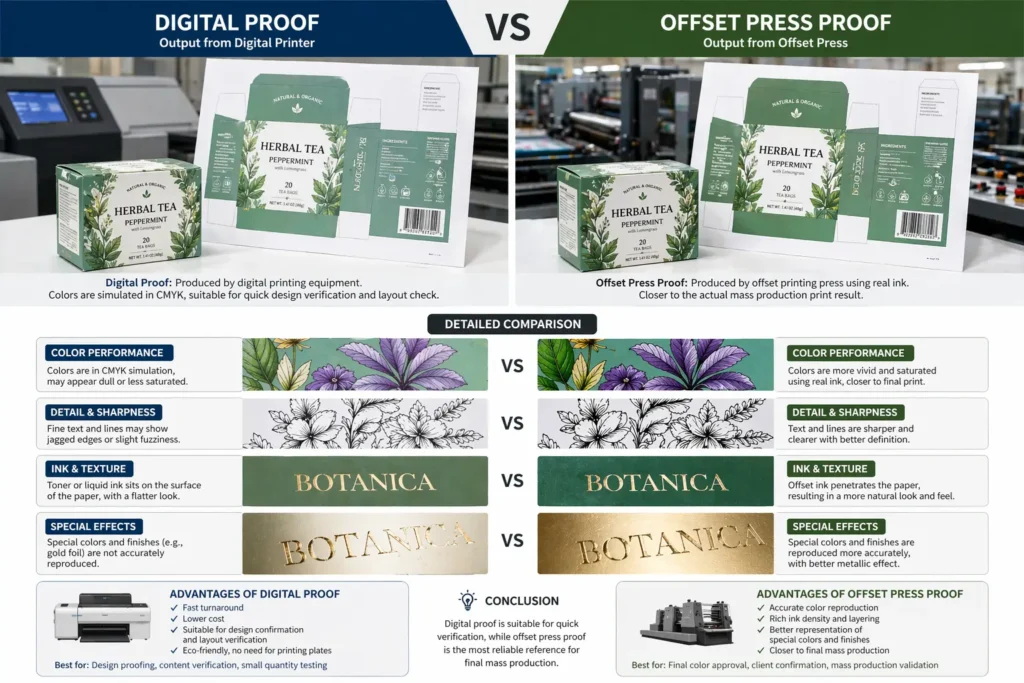
| Sample Standard | The buyer approves a digital proof but expects bulk production to match it exactly. | Clarify whether the sample is a digital proof, digital sample, machine sample, or pre-production sample. | Different sample types show different levels of color, material, and finish accuracy. |
| Color Control | The final color looks different on kraft paper, coated paper, tissue, stickers, or labels. | Confirm Pantone/CMYK values, material base color, and acceptable tolerance. | Color changes with material, ink absorption, lamination, and production method. |
| Shipping Terms | The buyer assumes freight, duties, or customs are included when they are not. | Confirm Incoterms, destination, who pays freight, who handles import clearance, and who carries risk. | Shipping terms must be clear before production, especially for large or heavy packaging orders. |
| Quality Check | Defects are found only after arrival, when fixing the issue is slow and expensive. | Confirm inspection points, photo/video checks, third-party inspection if needed, and balance payment timing. | Pre-shipment checks are much easier than solving problems after international delivery. |
Tip: On mobile devices, swipe horizontally to view the full table.
Low Price Can Be the Most Expensive Mistake
- What material is included?
- What sample is included?
- What finishing process is included?
- What quality check is included?
- What shipping term is included?
Always Separate Digital Proofs, Samples, and Bulk Production Standards
Understand MOQ Before You Assume the Factory Is Being Difficult
If MOQ is one of your main concerns, this guide on paper bag MOQ explains why minimums exist and how they affect production cost.
Confirm Incoterms and Shipping Responsibility Before Production Starts
- Is the quote EXW, FOB, CIF, DAP, DDP, or another term?
- Who books freight?
- Who pays duties and taxes?
- Who handles import customs clearance?
- Who carries risk if goods are damaged after handoff to the carrier?
- Are cartons, palletizing, labels, and shipping marks included?
Do not treat “door to door” as a replacement for clear shipping responsibility. Always ask what is included in writing, such as freight, duties, customs clearance, delivery address type, risk transfer, cartons, palletizing, labels, and shipping marks.
Do Not Skip Pre-Shipment Quality Checks
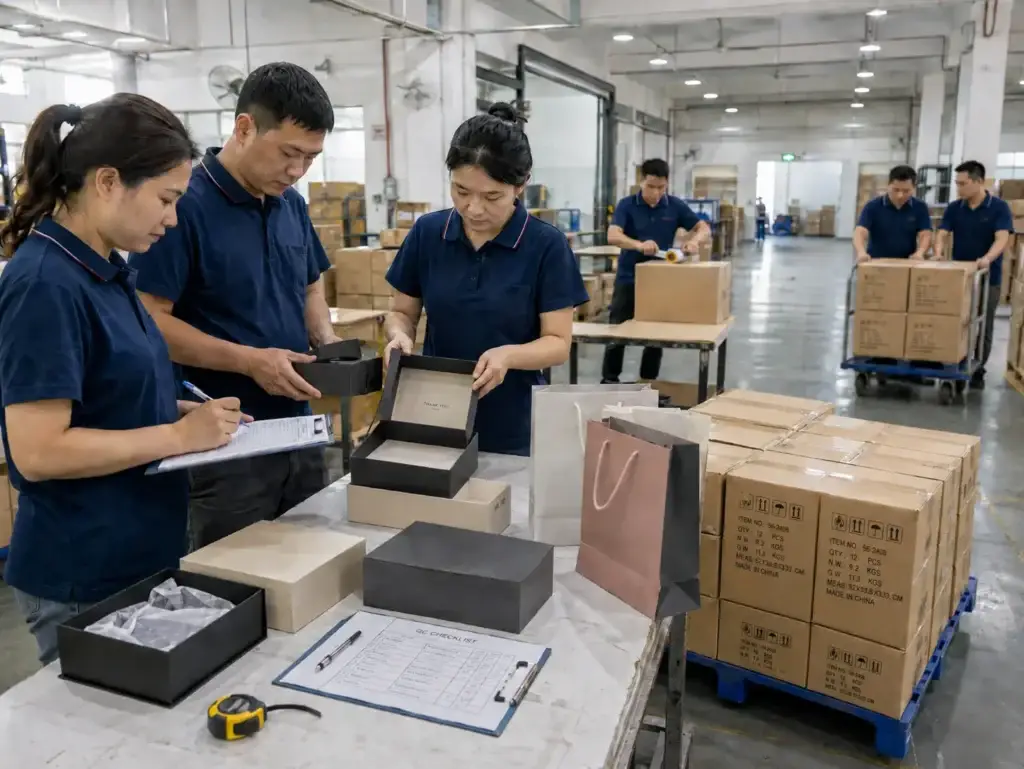
For custom packaging, check:
- Quantity and carton count.
- Product size and structure.
- Paper thickness or board thickness.
- Print color and logo position.
- Finish quality: lamination, foil, embossing, spot UV, handles, ribbons, or closures.
- Carton strength, packing method, and shipping marks.
- Random photos or video of bulk goods.
Suitable / Not Suitable: When Ordering from China Makes Sense
Ordering custom packaging from China is suitable when:
- You need custom paper bags, paper boxes, mailer boxes, tissue, labels, hang tags, stickers, or printed cards.
- You have clear artwork, dimensions, material requirements, and target quantity.
- You are planning repeat orders or want better unit cost at scale.
- You need several packaging components coordinated together.
- You have enough time for sampling, production, QC, and international shipping.
Ordering from China may not be suitable when:
- You need packaging in a few days.
- You have no confirmed size, artwork, quantity, or material direction.
- You need a very small quantity with complex finishing at a very low unit price.
- You are not ready to confirm samples, payment terms, or shipping responsibility.
- Your product requires special compliance and you have not checked import or regulatory requirements.
Common Mistakes Brands Make When Ordering Packaging from China
- Only comparing unit price. A lower unit price may exclude sample cost, inspection, stronger packing, better material, or clearer shipping terms.
- Not confirming material by sample. Paper weight and finish can look different in photos.
- Assuming Pantone looks identical on every material. Color can change across kraft paper, coated paper, tissue, stickers, labels, and woven materials.
- Ignoring carton size and shipping volume. Packaging can be bulky even when the unit price looks low.
- Paying before confirming production timeline. Custom finishes, peak seasons, and material availability can affect lead time.
- Using unclear Incoterms. If shipping responsibility is vague, the buyer may misunderstand freight, duties, customs, or risk.
- Not checking supplier product experience. A supplier that makes simple stickers may not be the right choice for rigid boxes or structured paper bags.
- Not having a signed sample standard. Without a confirmed sample or written tolerance, quality disputes become harder to resolve.
Why Flexibility Matters When Working with a China Packaging Factory
- Which material fits the product weight and sales channel?
- Which finish gives the effect you want without pushing cost too high?
- Which sample type is worth paying for?
- Which MOQ is realistic for your budget and production method?
- Which shipping method fits your launch timeline?
A Practical Buyer Checklist Before You Place the Order
Custom Packaging Order Checklist
Before placing a custom packaging order from China, prepare these details to help your supplier quote more accurately and reduce production risks.
Frequently Asked Questions
Yes, it can be safe when specifications, samples, payment terms, quality checks, and shipping responsibilities are clear before production. Most problems come from unclear expectations, not simply from the supplier being located in China.
Ask for product-specific experience, factory photos or videos, similar case examples, sample options, business details, and clear communication about materials, MOQ, production time, and shipping terms. For larger orders, you can also use third-party verification or inspection services.
For custom packaging with specific color, material, structure, or finishing requirements, yes. A sample helps confirm expectations before mass production. For very simple repeat orders, a digital proof may be enough, but buyers should understand what it can and cannot verify.
Many custom packaging orders use a deposit before production and balance before shipment, but terms vary by supplier, order size, relationship, and risk level. Buyers should confirm payment milestones, sample fees, refund rules, and what inspection can happen before balance payment.
There is no single best Incoterm for every buyer. FOB may fit buyers with their own freight forwarder, while DDP or door-to-door service may be easier for some small businesses. The important point is to confirm who pays freight, who handles customs, who pays duties, and when risk transfers.
Timeline depends on artwork readiness, sampling, material availability, order quantity, finishing complexity, production queue, and shipping method. Simple paper packaging can move faster, while custom finishes, machine samples, or sea freight usually add more time.
For a more detailed breakdown, you can review our guide on how long custom packaging takes, which explains each stage from artwork confirmation and sampling to mass production and shipping.
Prepare packaging type, size, quantity, material preference, artwork, printing colors, finishing requirements, sample needs, delivery country, shipping preference, and target timeline. The more complete your brief is, the more accurate the quote will be.
Final Recommendation: Choose the Factory That Helps You Clarify Risk Before Production
Review Your Packaging Specs Before Production
Planning custom paper packaging or apparel packaging from China? Originality Pack can help review your product type, material, MOQ, sample needs, color expectations, timeline, and shipping plan before quoting.
This gives overseas buyers a clearer view of production risks, cost factors, and key details before committing to bulk production.